


Industry | Geography Optional UPSC Notes
₹118.00
₹118 for 411 pages — about 29 paise a page. Mains 2027 Edition.
Most Geography Optional aspirants read this section as location factors. Cotton in Mumbai, jute on the Hugli, steel near the ore, the same paragraph each time. Then UPSC asks for an essay on nautical tourism, or how Chennai, Pune and Gurugram became auto-hubs, and the stock paragraph does not fit.
Industry puts the whole Paper II section into one book: why each industry sits where it does, what has changed, and where policy and tourism fit.
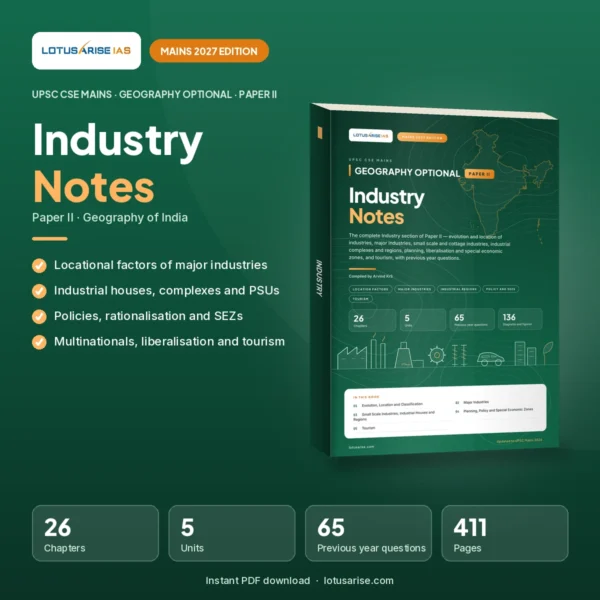
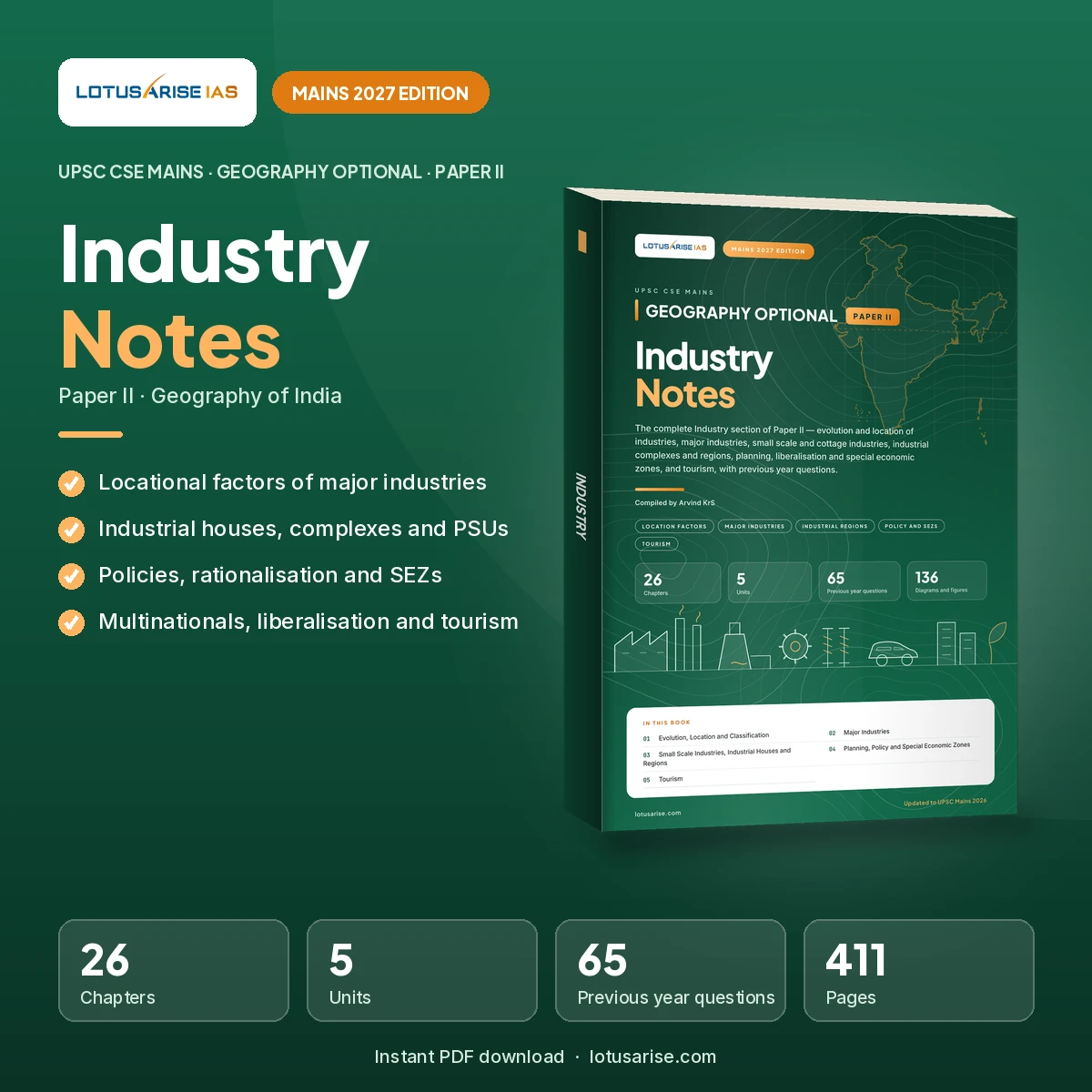
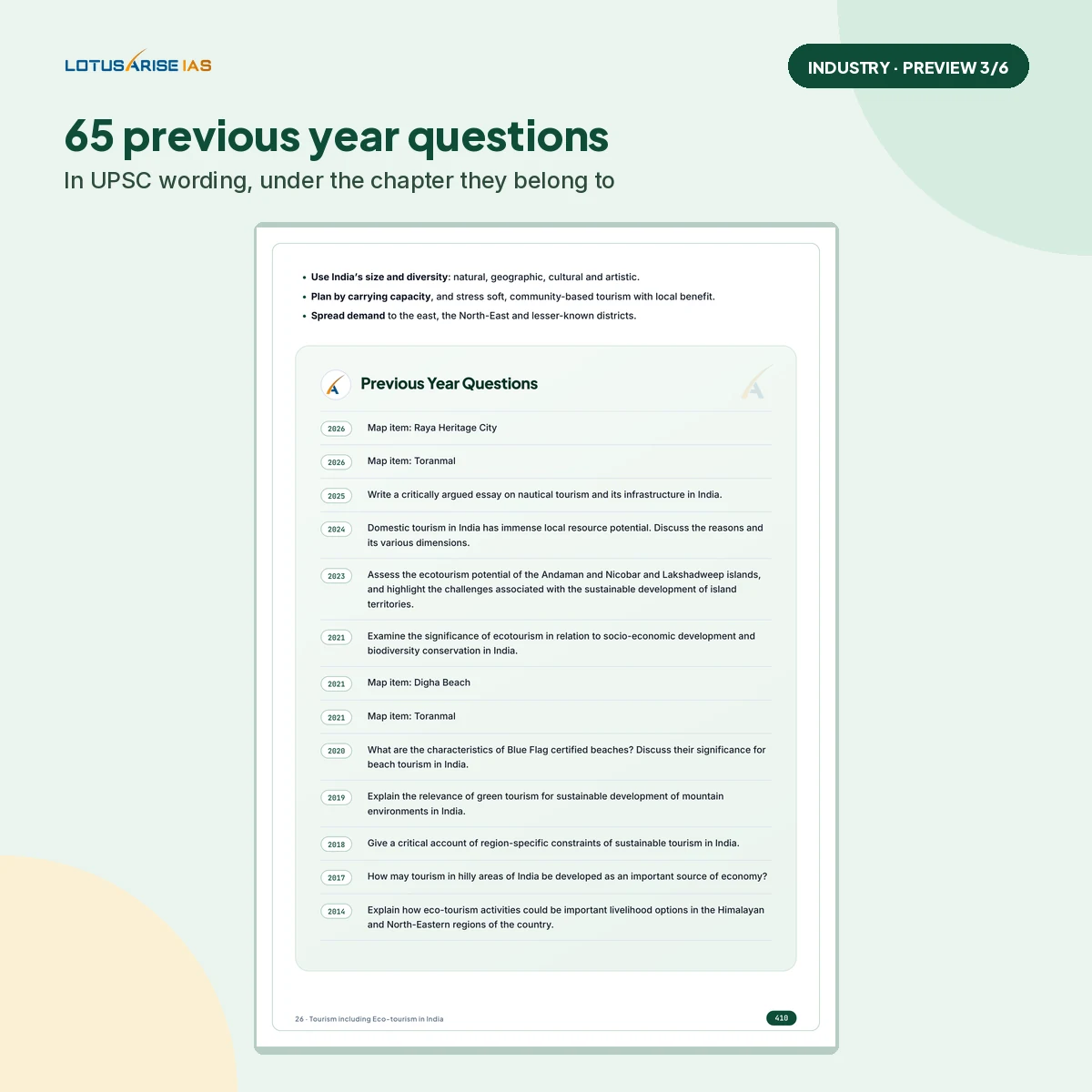
📝 65 PYQs, updated to Mains 2026 — in UPSC’s wording, map items included, placed by chapter
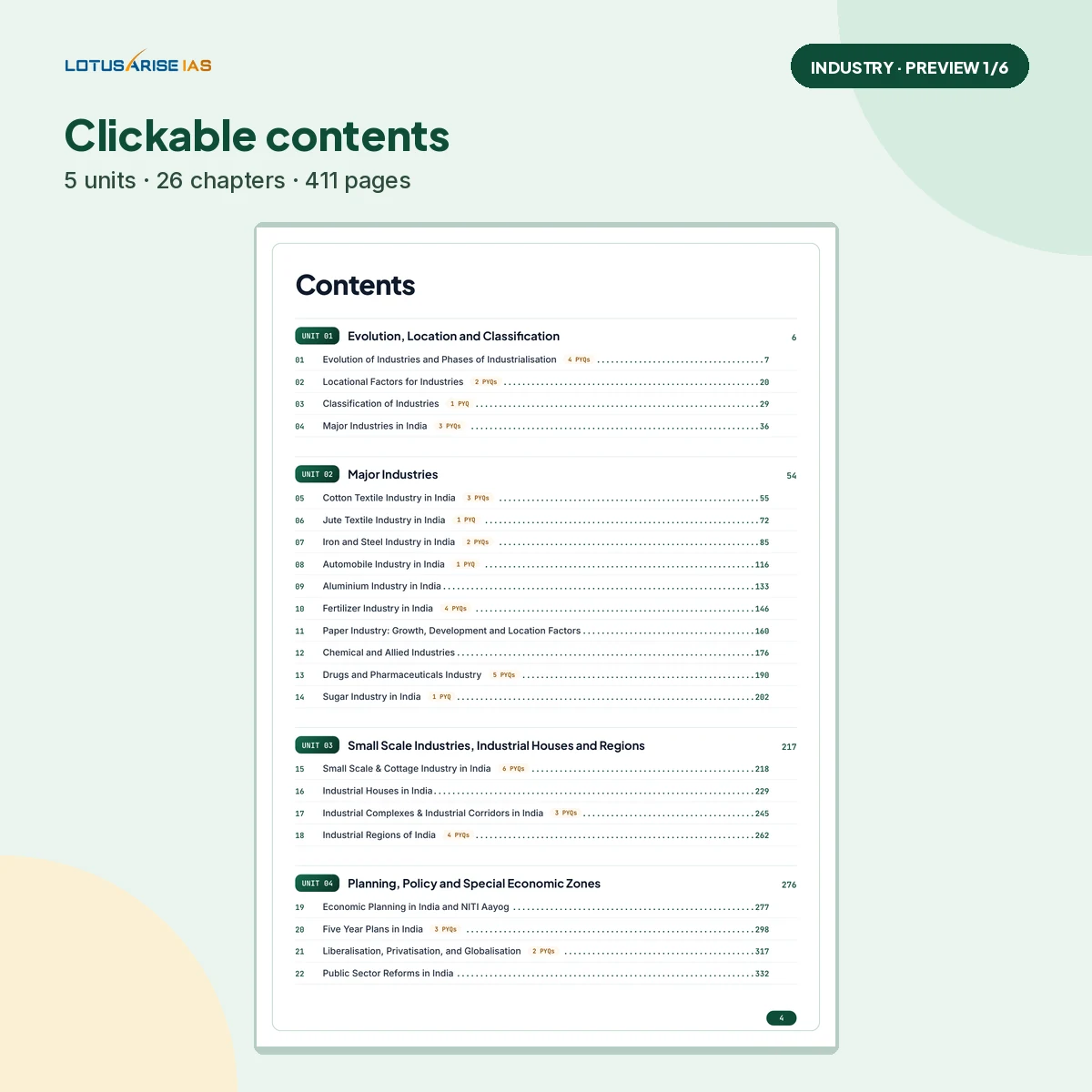
🧭 26 chapters in 5 units — location, major industries, small scale and regions, planning and SEZs, tourism
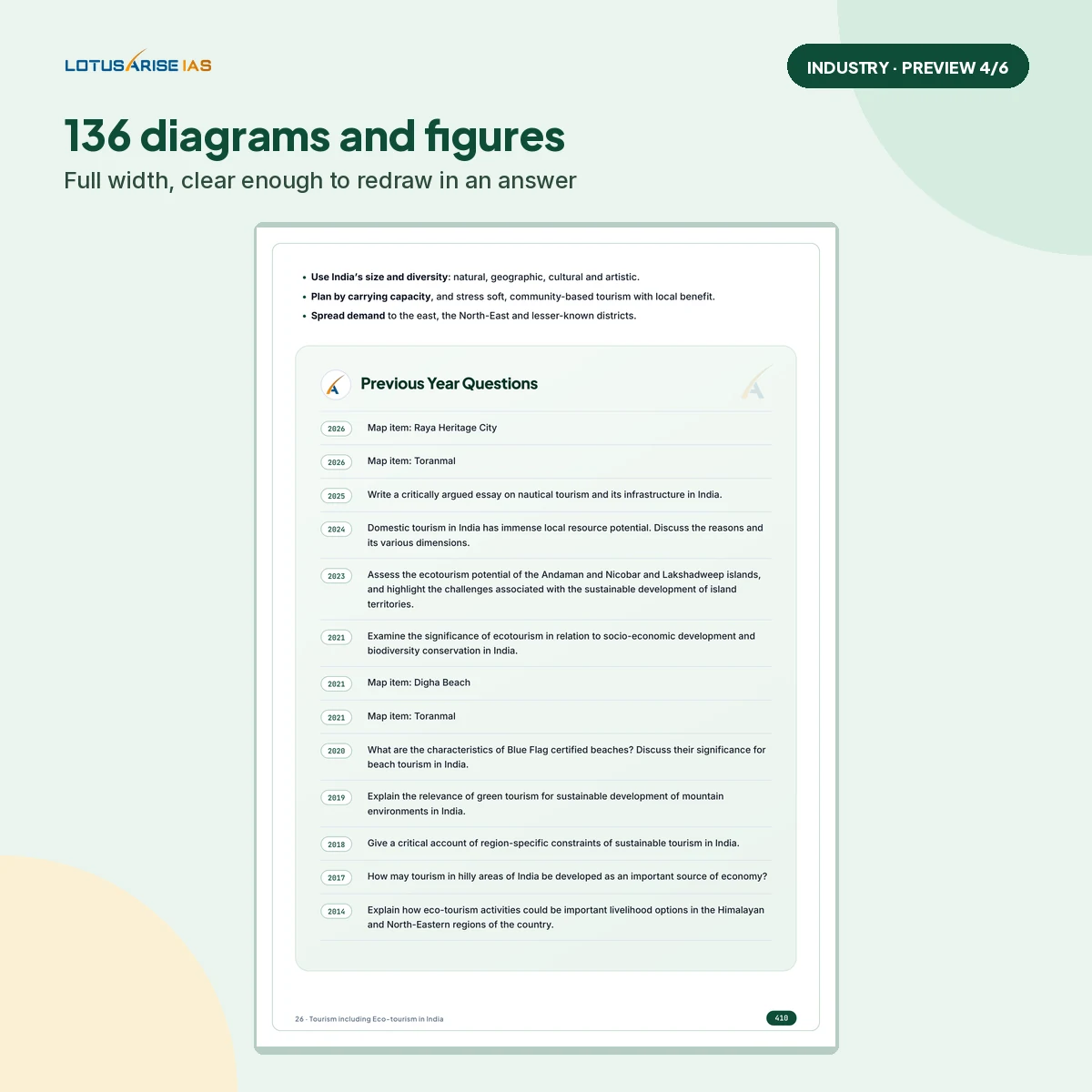
🗺️ 136 diagrams and figures — full width, maps included, clear enough to redraw
🏭 Figures to 2025-26 — steel, vehicles, fertiliser, data centres, defence and the July 2026 urea policy
📱 Instant PDF download, 411 pages — clickable contents, laptop, mobile or tablet, offline, printable
One-time payment. No subscription. Unlimited downloads — the link does not expire.
⭐ Read by 300,000+ UPSC aspirants every month on LotusArise IAS
Features:
- Comprehensive Coverage
- Complete Syllabus
- Suitable for: UPSC & State PSCs exams
- Format: Digital PDF (Downloadable)
- 337,362+ aspirants visit every month
The problem most aspirants don’t talk about
Ask a Geography Optional aspirant about this section a few months into preparation. They won’t say industry is too hard to understand. They will say one of three things:
“I can write the location factors of cotton and steel in my sleep, but ‘how did these clusters emerge’ needs something my notes do not have.”
“My liberalisation, MNC and SEZ notes are economy notes. They give the policy and leave out the place.”
“I kept tourism for the last week because it looked light. Then I counted, and it is the most asked chapter in the section.”
None of this is a lack of effort. Most material treats old industries well and stops short of what has changed since, while tourism and policy sit somewhere else entirely. What is missing is one book that takes the section from location to policy to tourism in a single order, with the questions marked. Industry is that book.
Why this section is a smart place to spend your hours
This section has a steady record and a manageable one. The book carries 65 questions from it, from 1989 to 2026, with at least two in every year’s papers from 2013 to 2026.
Tourism alone has 14 of them, more than double any other chapter. Small Scale and Cottage Industry has 6 and Pharmaceuticals 5. Mains 2026 went to defence and the private sector, India as a data centre hub, automobile clusters and the fertiliser supply chain, with Raya Heritage City and Toranmal on the map.
The book also tells you where not to start. Seven chapters, including aluminium, paper, chemicals and disinvestment, have no direct PYQ yet, and their panels say so. They are there for background and coverage.
It pays back across the paper. Ore, coal and pipelines from Resources explain location. The fertiliser and Five Year Plan chapters link straight to Agriculture.
The challenge is not the list of industries. It is having one current account of the whole section that you can actually revise.
What’s inside — 411 pages in 5 units
🏗️ Evolution, Location and Classification — 4 chapters
- Phases of industrialisation, from the early mills to the present
- Locational factors, agglomeration and shifts in metropolitan location
- Classification of industries and footloose industries
- Major industries at a glance, with industrial hazards, defence and data centres
🏭 Major Industries — 10 chapters
- Cotton and jute textiles, with the Hugli belt
- Iron and steel, major plants and mini steel plants
- Automobiles, and how the three hubs emerged
- Aluminium, fertilisers and the global supply chain
- Paper, chemicals and allied industries, sugar
- Drugs and pharmaceuticals, and why the west leads
🧵 Small Scale Industries, Industrial Houses and Regions — 4 chapters
- Small scale, cottage and agro-based industries, and the decline of crafts
- Industrial houses and public sector undertakings
- Industrial complexes, with Jamshedpur and Bokaro, and industrial corridors
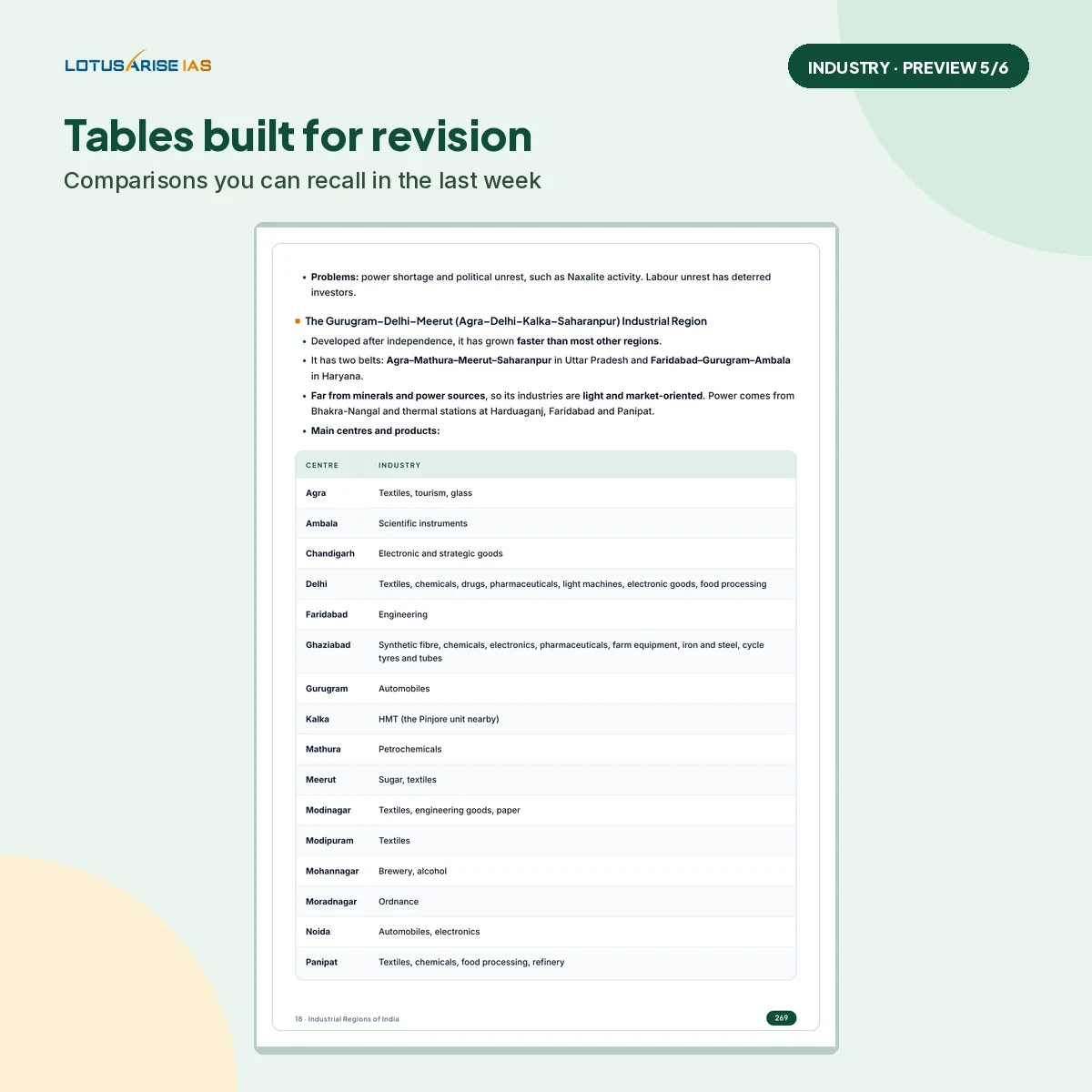
- Major and minor industrial regions, agro-industrial regions and Malwa
📜 Planning, Policy and Special Economic Zones — 7 chapters
- Economic planning, NITI Aayog and the Five Year Plans one by one
- Liberalisation, privatisation and globalisation, with the New Industrial Policy of 1991
- Public sector reforms and disinvestment
- Multinational companies and Special Economic Zones
🏝️ Tourism — 1 chapter
- Tourism including eco-tourism: nature, heritage, pilgrimage and medical tourism, hill and island tourism, nautical tourism and Blue Flag beaches
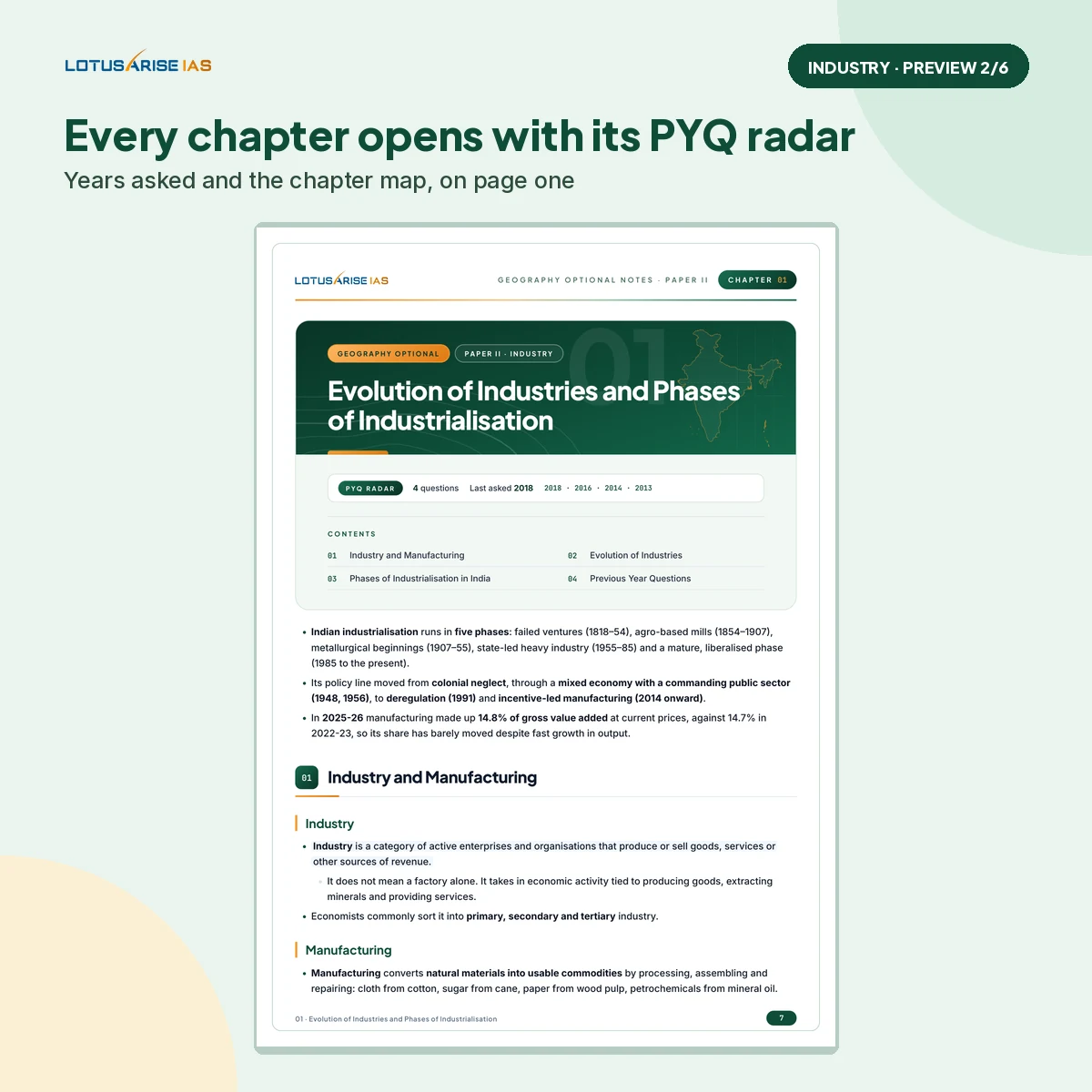
What makes this different from a downloaded PDF? Each chapter is marked against the questions UPSC has actually asked on it. A PYQ radar at the start shows how many times the topic has come and when it last did. Year tags sit on the headings UPSC has asked about. Faint highlights pick out key points, definitions and PYQ terms, so your second reading takes far less time than your first. The figures reach 2025-26: crude steel capacity of 220.4 million tonnes, 3.47 crore vehicles produced.
One thing to be clear about: the book gives the previous year questions, not model answers. Solved answers are in the Geography Optional 300+ Score Pack.
The aspirant who buys this
First-timers — You want one account of Indian industry for the optional from the start. Read the location unit first and the major industries follow from it.
Repeaters — You know the location factors, but your answers stop there. Use the sections on clusters, corridors and regions, then go through the PYQ list at the end of each chapter.
Aspirants short of time before Mains — Start with tourism, then cottage industries and pharmaceuticals. The radar, year tags and highlights show you what to read first.
Self-study aspirants outside Delhi, Prayagraj and Jaipur — No classroom and no batch. You get one organised book that you can read anywhere, and print for handwritten practice.
Working professionals — One industry at a time on your phone, offline, with no schedule and no expiry.
State PSC aspirants with Geography — Indian industry is common ground, so the same chapters serve your paper too.
Why not just use free notes from Telegram?
Free notes exist, and most aspirants already have several. Many of these topics are also on our own website, free to read.
The difference is not that free material is wrong. It is that nothing ties it together. A forwarded PDF rarely tells you which of its pages UPSC has asked about, it seldom connects a policy to the places it changed, and nobody tells you when its production figures have gone out of date. Here you get one order, every PYQ placed under its chapter, and a file you can keep and print.
If you have the time to build and maintain your own file from scattered sources, you may not need this. If you would rather open one book and start revising, this is what it is for.
The price
411 pages, 26 chapters, 65 PYQs and 136 diagrams and figures — ₹118. That is about 29 paise a page.
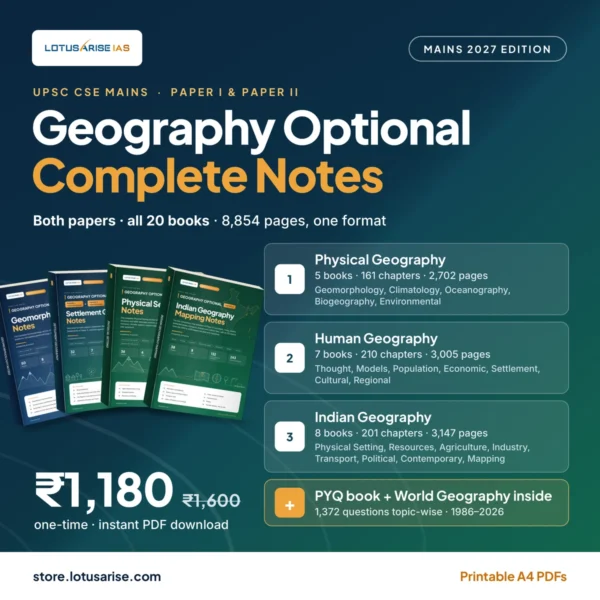
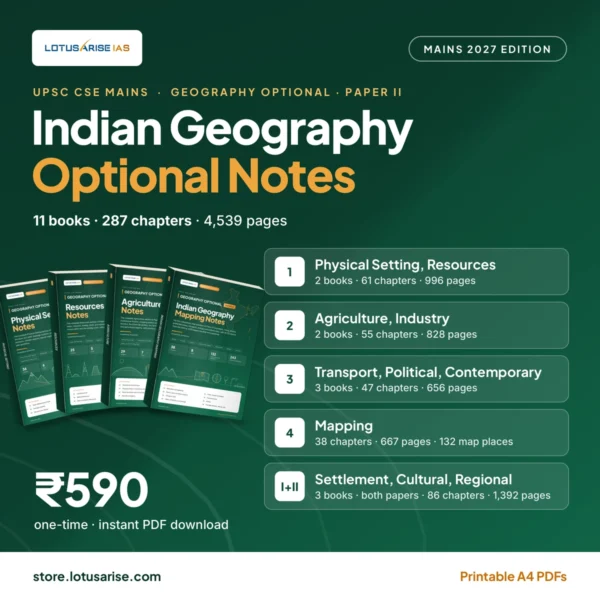
This book is also part of the Indian Geography: Geography Optional Notes bundle at ₹590 and of Geography Optional Complete Notes at ₹1,180.
One-time payment. No subscription. No recurring charge.
The download link reaches your email right after payment — please check your spam folder if you do not see it. Unlimited downloads, no expiry. English medium.
Read the free sample first (PDF)
For support: support@lotusarise.com
You may also like…
-

#OFFER: Geography Optional Complete Notes (PDF) – UPSC Mains (Paper I & II)
Original price was: ₹1,600.00.₹1,180.00Current price is: ₹1,180.00. -