



Biogeography | Geography Optional UPSC Notes
₹118.00
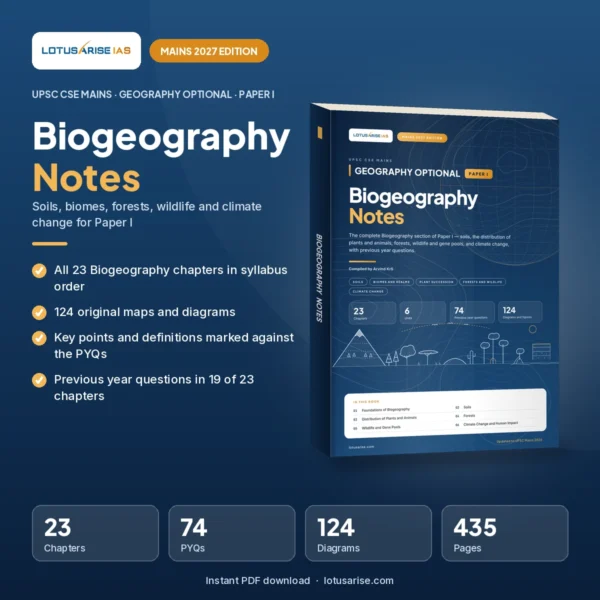
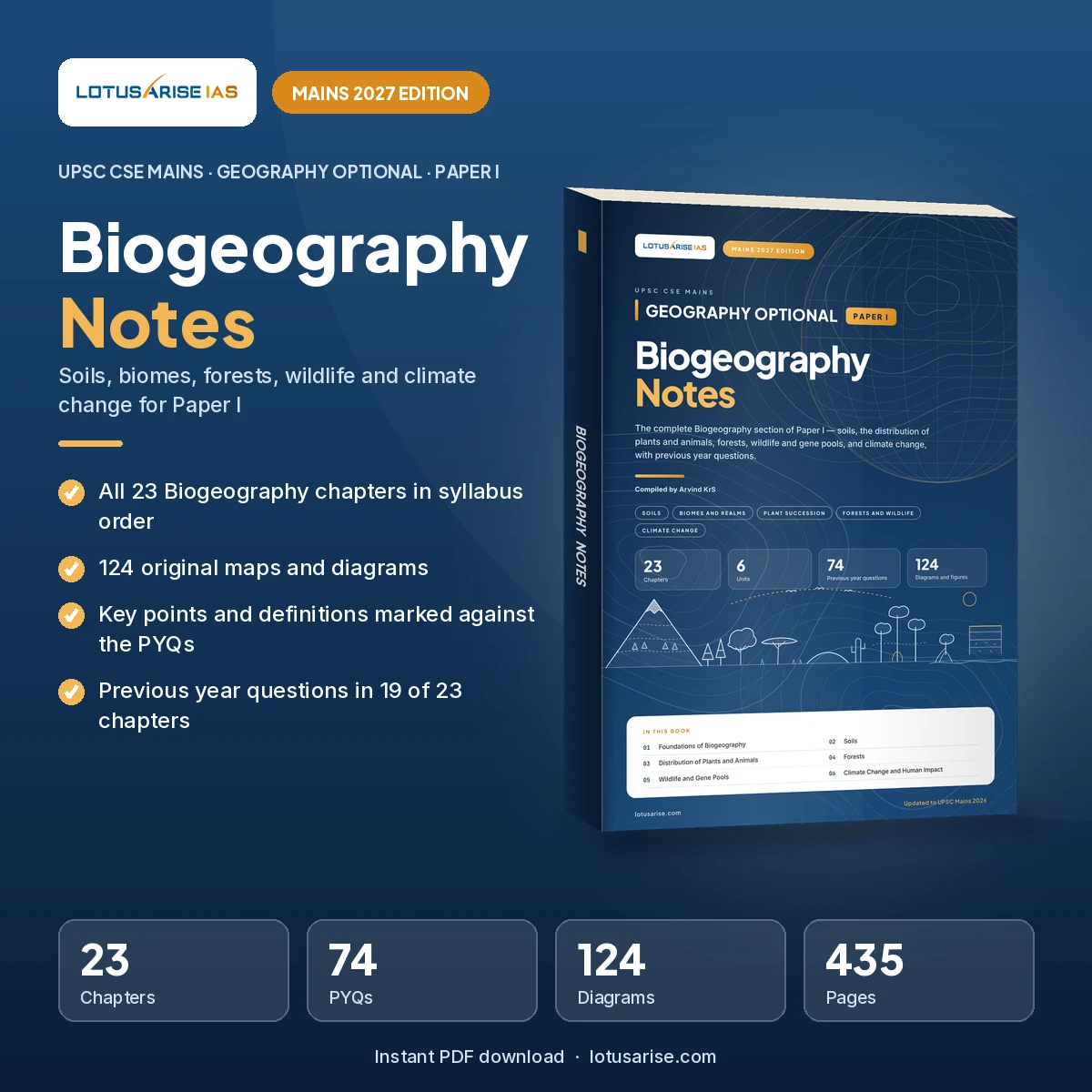
₹118 for 435 pages — about 27 paise a page. Mains 2027 Edition.
Most Geography Optional aspirants treat Biogeography as a soil table and a list of biomes. Zonal and azonal copied from one place, realms from another, little on India. Then UPSC asks how a solum differs from a pedon, or why soil erosion is called creeping death, and the answer runs out after the definition.
Biogeography takes the whole Paper I section in one order, from soils to climate change, with India alongside the world.
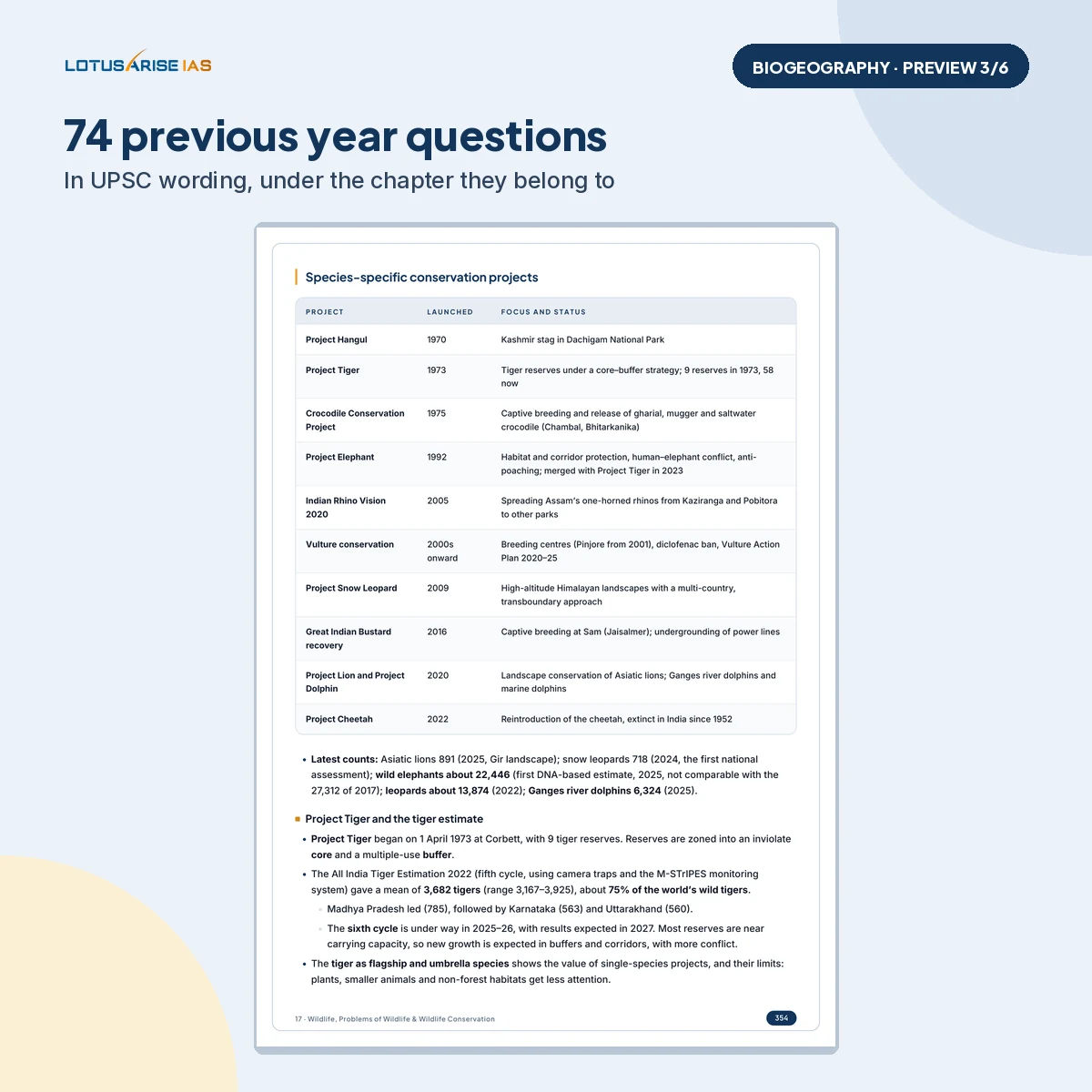
📝 74 PYQs, updated to Mains 2026 — in UPSC’s wording from 1992 on, under the chapter each belongs to
🧭 23 chapters in 6 units — foundations, soils, plants and animals, forests, wildlife and gene pools, climate change
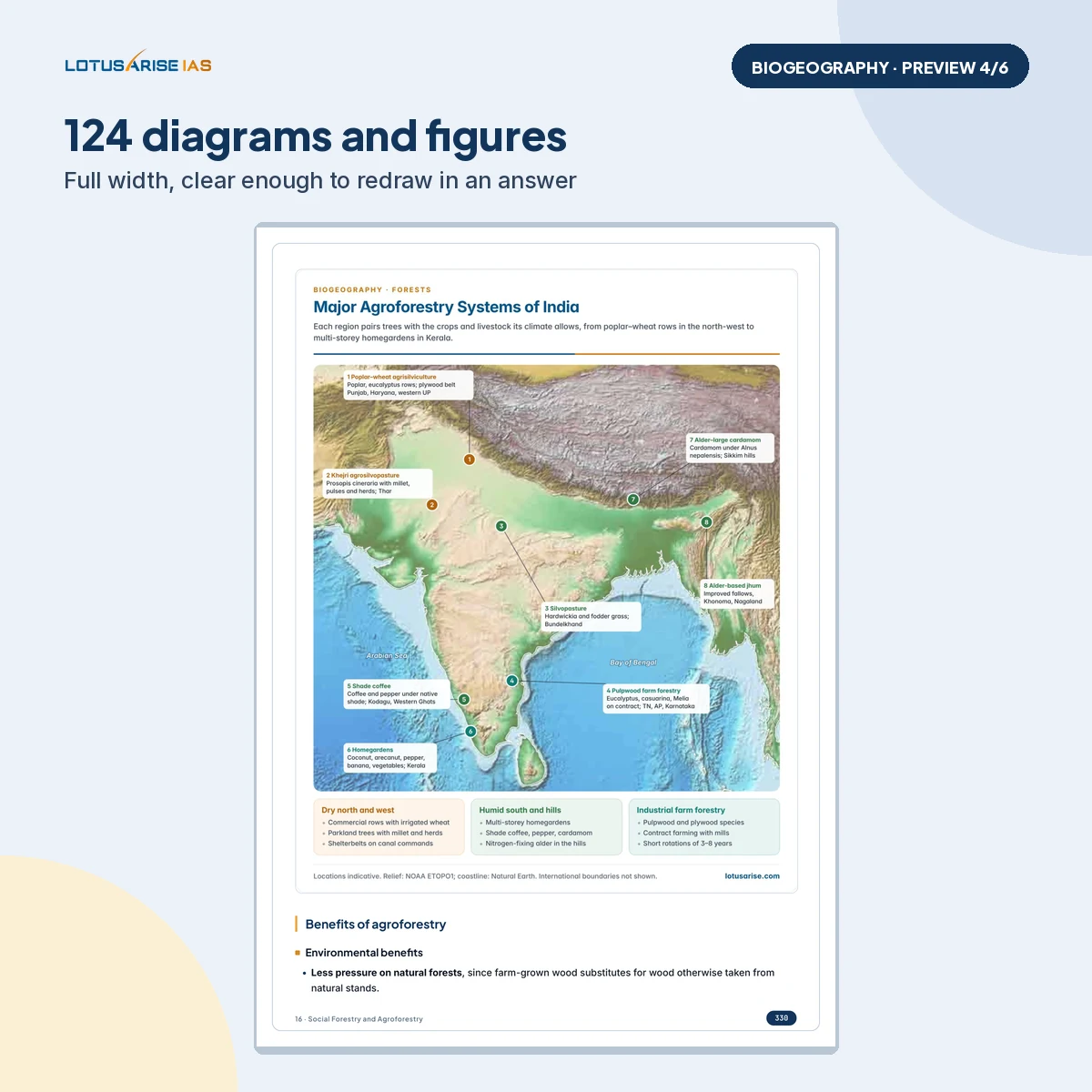
🗺️ 124 diagrams and figures — clear enough to redraw in an answer
🌱 Soils in five full chapters — pedogenesis, properties, profile, classification and erosion, with Indian evidence
📱 Instant PDF download, 435 pages — clickable contents, laptop, mobile or tablet, offline, printable
One-time payment. No subscription. Unlimited downloads — the link does not expire.
⭐ Read by 300,000+ UPSC aspirants every month on LotusArise IAS
Features:
- Comprehensive Coverage
- Complete Syllabus
- Suitable for: UPSC & State PSCs exams
- Format: Digital PDF (Downloadable)
- 337,362+ aspirants visit every month
The problem most aspirants don’t talk about
Ask a Geography Optional aspirant about Biogeography a few months into preparation. They won’t say plants and animals are too hard to learn. They will say one of three things:
“Soils is the part I avoid. Zonal, azonal, USDA, horizons, pedocals. I know the words, but I don’t have the system.”
“My biomes are descriptions. When the question asks for the vertical zonation of Himalayan vegetation, or the link between climate and vegetation in the mountain biome, I have no argument to make.”
“My notes are from whatever I could find on ecology and environment. None of it is written for a geography answer, and little of it has a map or an Indian example.”
None of this is a lack of effort. Biogeography sits between soil science, biology and conservation, and most material treats those as separate worlds. What is missing is one book that holds them together as geography. Biogeography is that book.
Why this section is a smart place to spend your hours
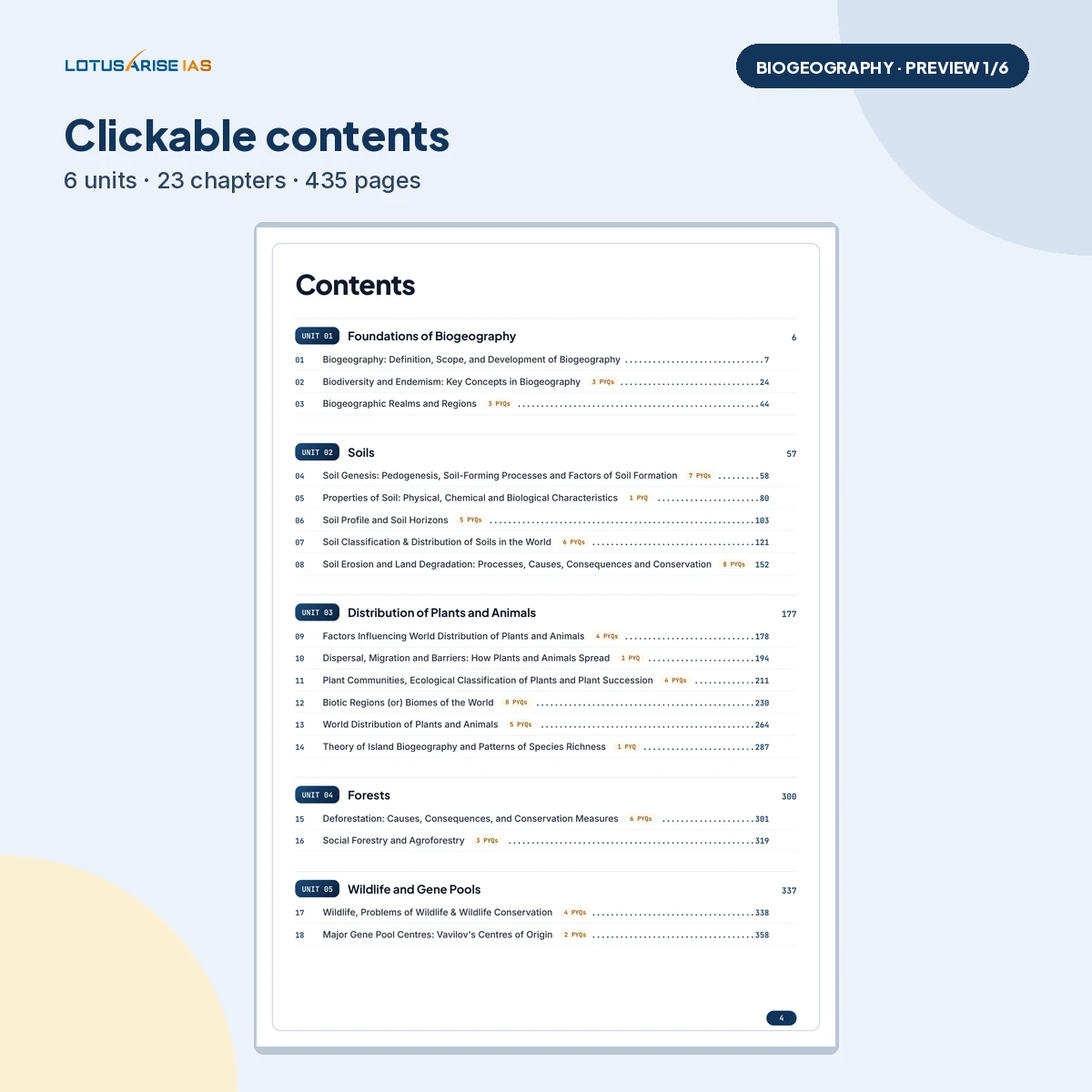
This section has a steady record. The book carries 74 PYQs, with at least 2 in every year’s papers from 2013 to 2026. The contents page shows where they gather: 8 each on soil erosion and biomes, 7 on soil genesis, 6 each on soil classification and deforestation. Soils alone, then, deserve serious hours.
The questions are also getting sharper. The 2026 paper asked about solum and pedon, the vertical zonation of the Himalayas and overgrazing. The 2025 paper asked about agricultural deforestation in the Amazon and Congo Basins.
It also pays back across the paper. Soil types, natural vegetation, soil erosion, deforestation and social forestry all return in Paper II with India at the centre, and wildlife conservation and biodiversity feed your answers on environment.
The challenge is not the facts. It is having one current account of them that you can actually revise.
What’s inside — 435 pages in 6 units
🌐 Foundations of Biogeography — 3 chapters
- Definition, scope and development of biogeography
- Biodiversity and endemism
- The eight biogeographic realms and the biogeographic zones of India
🟤 Soils — 5 chapters
- Pedogenesis, soil-forming processes and factors
- Physical, chemical and biological properties; soil health and Indian evidence
- Soil profile and master horizons
- Zonal system, USDA taxonomy, the World Reference Base, world distribution
- Soil erosion, land degradation and conservation, with India
🌿 Distribution of Plants and Animals — 6 chapters
- Factors controlling distribution; dispersal, migration and barriers
- Plant communities, ecological classification and succession
- Terrestrial and aquatic biomes, and biome shifts
- World distribution of plants and animals
- Island biogeography and patterns of species richness
🌲 Forests — 2 chapters
- Deforestation: causes, consequences and conservation
- Social forestry and agroforestry, with policy and programmes
🐅 Wildlife and Gene Pools — 2 chapters
- Problems of wildlife, the global framework and conservation in India
- Vavilov’s centres of origin, later revisions and gene pool conservation
🌡️ Climate Change and Human Impact — 5 chapters
- Climate and the distribution of life, past and present
- Range shifts, biogeographic responses and adaptation strategies
- Human impact, habitat fragmentation and landscape connectivity
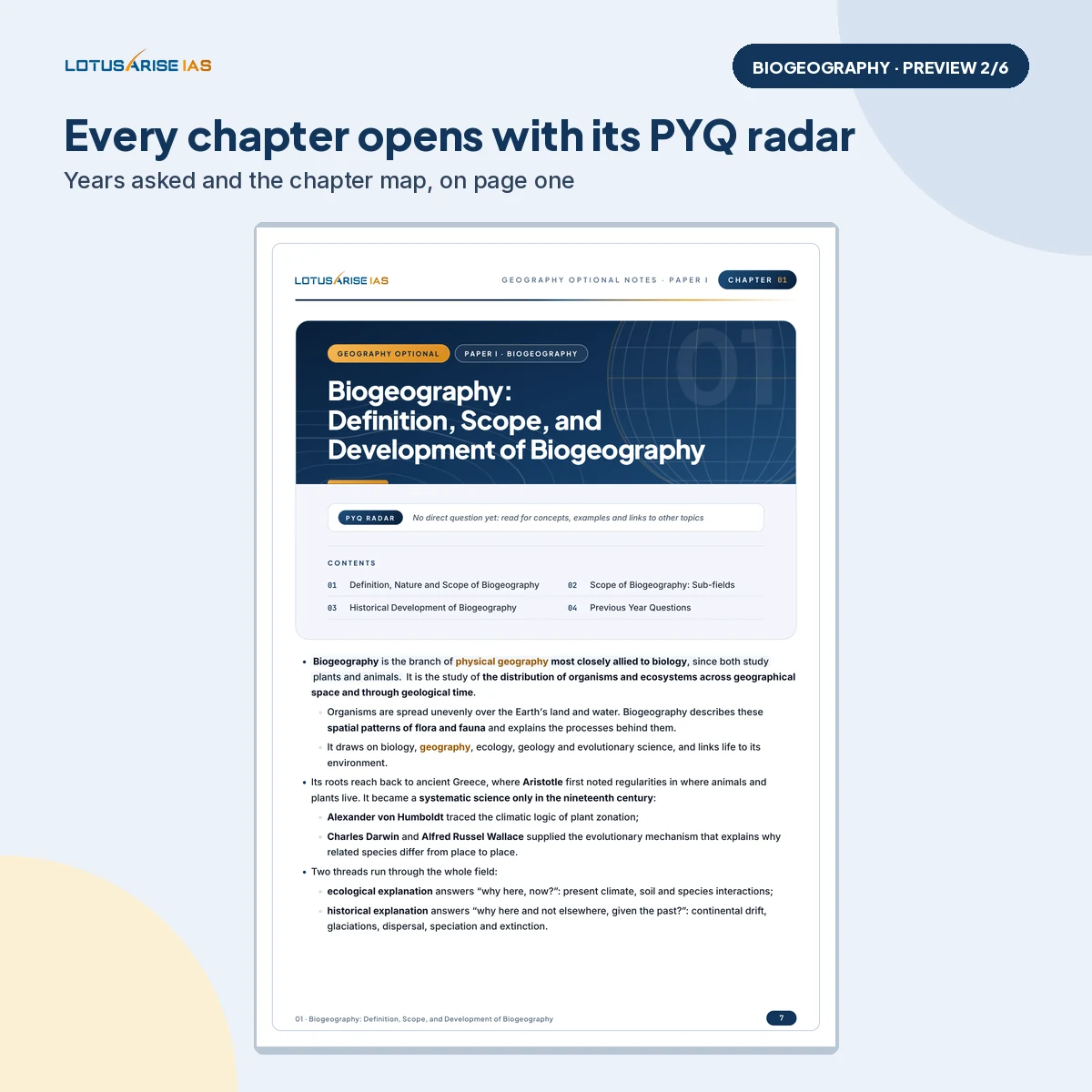
What makes this different from a downloaded PDF? Each chapter is marked against the questions UPSC has actually asked on it. A PYQ radar at the start shows how many times the topic has come and when it last did. Year tags sit on the headings UPSC has asked about. Faint highlights pick out key points, definitions and PYQ terms, so your second reading takes far less time than your first. A question that touches two chapters is listed under both. Four chapters have no direct question yet, and their radars say so.
One thing to be clear about: the book gives the previous year questions, not model answers. Solved answers are in the Geography Optional 300+ Score Pack.
The aspirant who buys this
First-timers — You want one account of soils, biomes and wildlife from the start instead of collecting them piece by piece. Read in order and the terms stop feeling like a separate science.
Repeaters — You know the biomes, but your soils answers are thin. Start with the five soil chapters, then go through the PYQ list at the end of each chapter.
Aspirants short of time before Mains — Soils and biomes carry the heaviest counts. The radar, year tags and highlights show you what to read first.
Self-study aspirants outside Delhi, Prayagraj and Jaipur — No classroom and no batch. You get one organised book that you can read anywhere, and print for handwritten practice.
Working professionals — One chapter at a time on your phone, offline, with no schedule and no expiry.
State PSC aspirants with Geography — Soils, vegetation and conservation are common ground, so the same chapters serve your paper too.
Why not just use free notes from Telegram?
Free notes exist, and most aspirants already have several. Many of these topics are also on our own website, free to read.
The difference is not that free material is wrong. It is that nothing ties it together. A forwarded PDF rarely tells you which of its pages UPSC has asked about, it seldom connects soils to vegetation or India to the world, and nobody tells you when it has gone out of date. This book was compiled in October 2026. It already has a 2026 assessment of India’s acid soils and the desertification conference held at Ulaanbaatar in August 2026.
If you have the time to build and maintain your own file from scattered sources, you may not need this. If you would rather open one book and start revising, this is what it is for.
The price
435 pages, 23 chapters, 74 PYQs and 124 diagrams and figures — ₹118. That is about 27 paise a page.
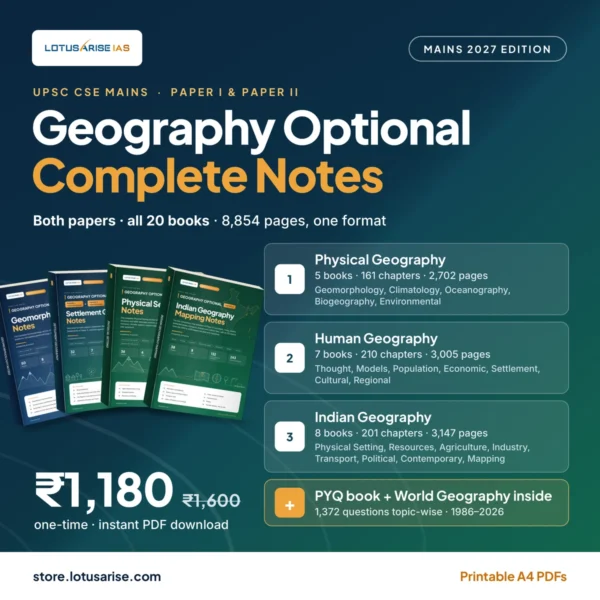
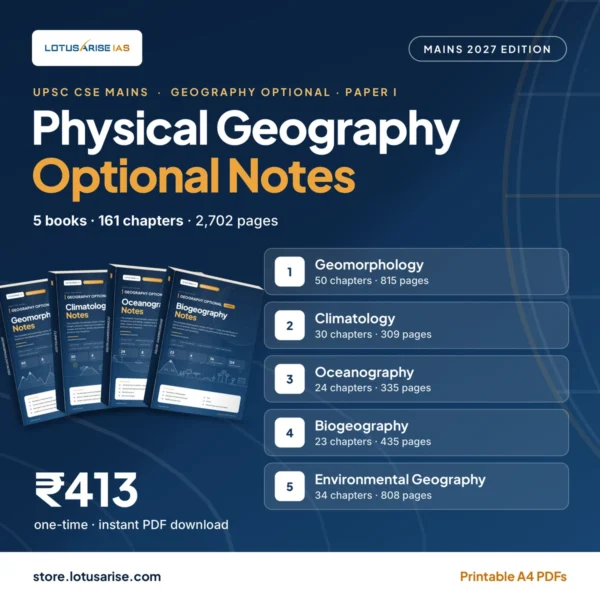
This book is also part of Physical Geography: Geography Optional Notes (₹413) and Geography Optional Complete Notes (₹1,180).
One-time payment. No subscription. No recurring charge.
The download link reaches your email right after payment — please check your spam folder if you do not see it. Unlimited downloads, no expiry. English medium.
Read the free sample first (PDF)
For support: support@lotusarise.com
You may also like…
-

#OFFER: Geography Optional Complete Notes (PDF) – UPSC Mains (Paper I & II)
Original price was: ₹1,600.00.₹1,180.00Current price is: ₹1,180.00. -