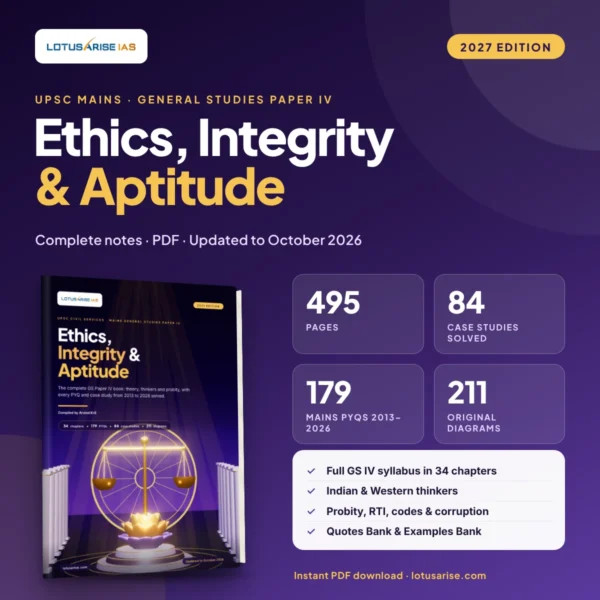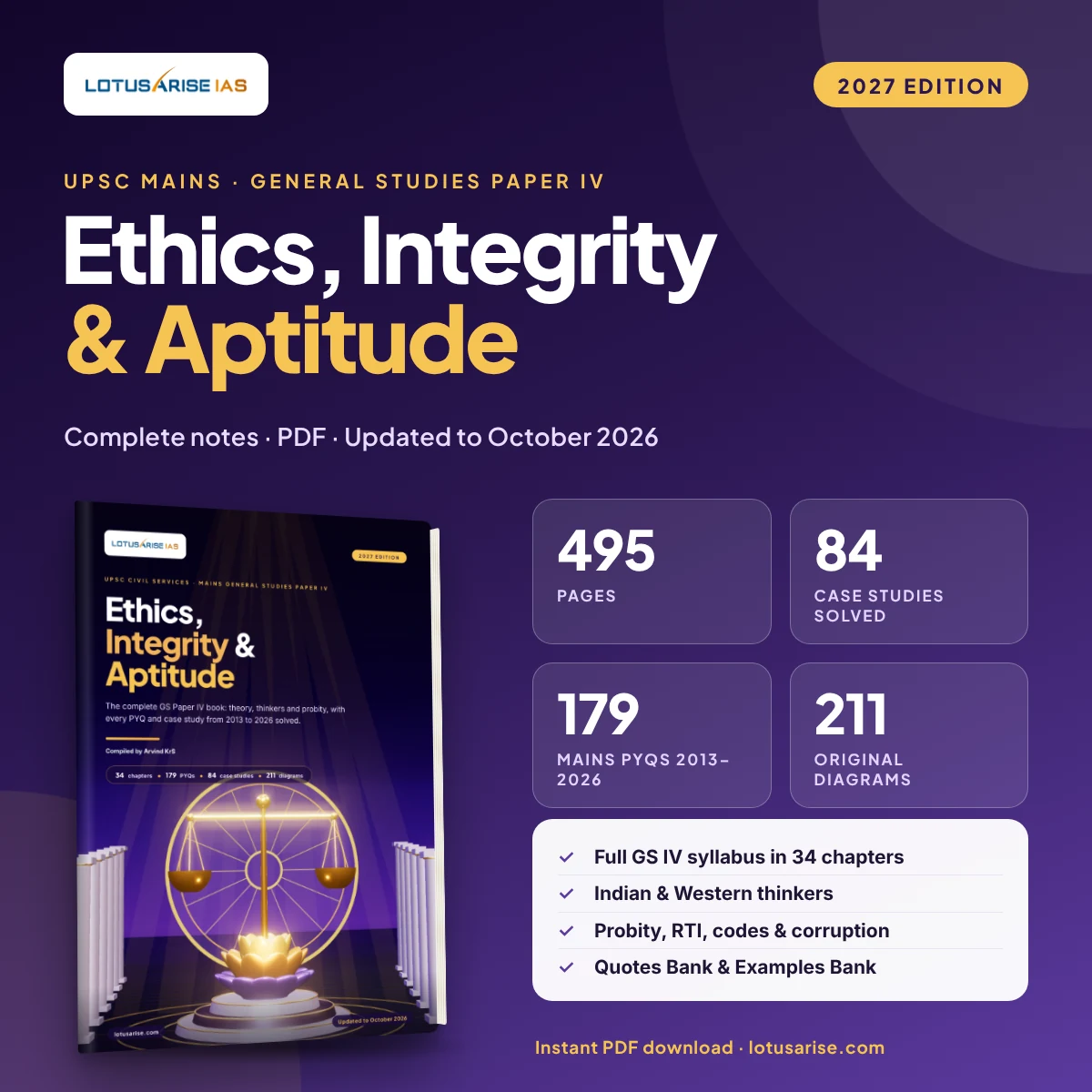


Ethics, Integrity and Aptitude Notes for UPSC: Mains GS Paper IV (2027 Edition) by LotusArise IAS
Original price was: ₹500.00.₹295.00Current price is: ₹295.00.
₹295 for the 2027 Edition. MRP ₹500 — 495 pages, about 60 paise a page.
Most aspirants prepare GS Paper IV the wrong way. A few definitions from one PDF, thinkers from another, and case studies left for the last fortnight. Then the paper asks what a District Magistrate should do when the rules point one way and compassion the other — and they write a list of memorised values instead of a decision they can defend.
Ethics, Integrity and Aptitude Notes for UPSC puts the theory and the practice in one book.
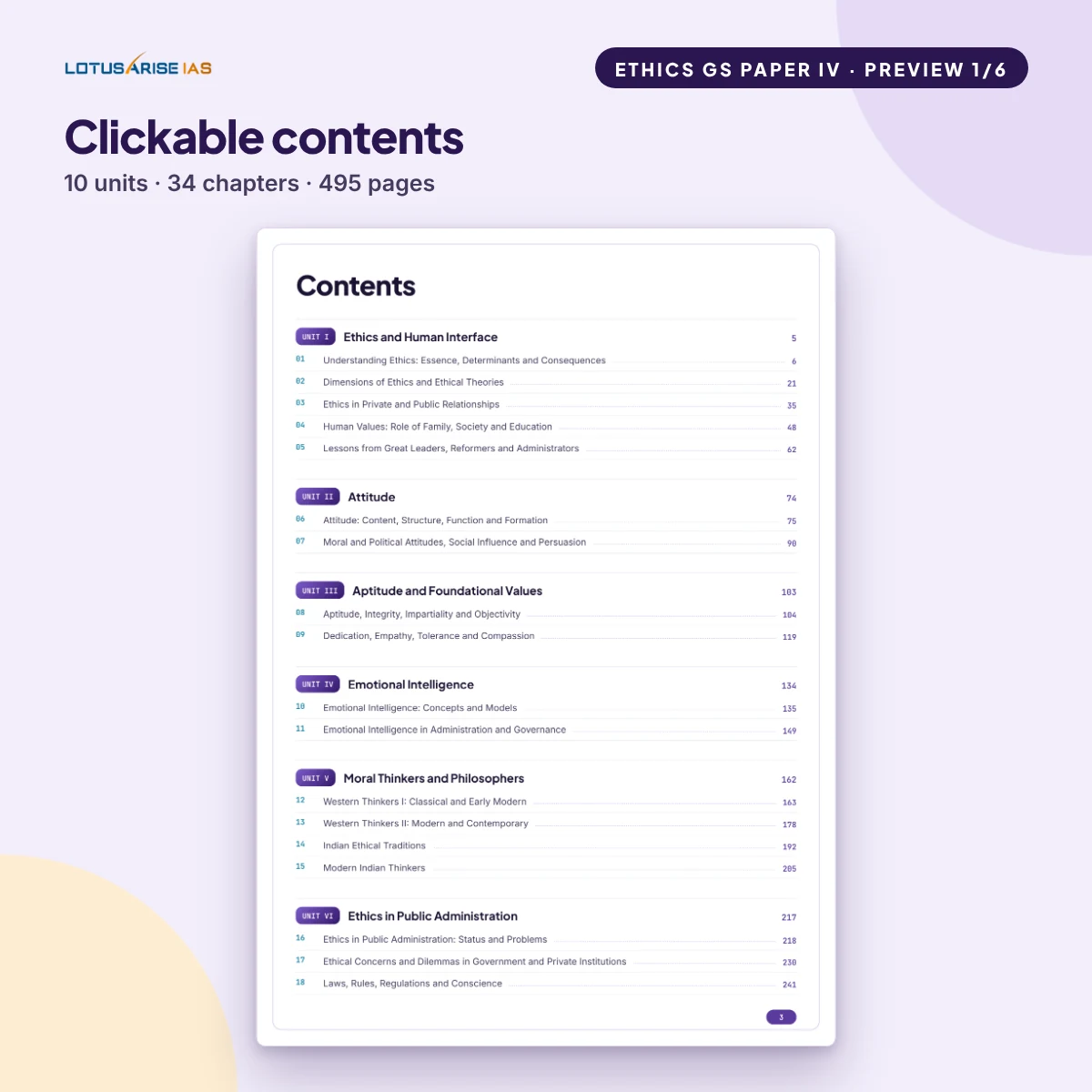
⚖️ 34 chapters in 10 units, 495 pages — the full GS IV syllabus, from ethics and human interface to probity, RTI, codes of conduct and corruption, with Indian and Western thinkers
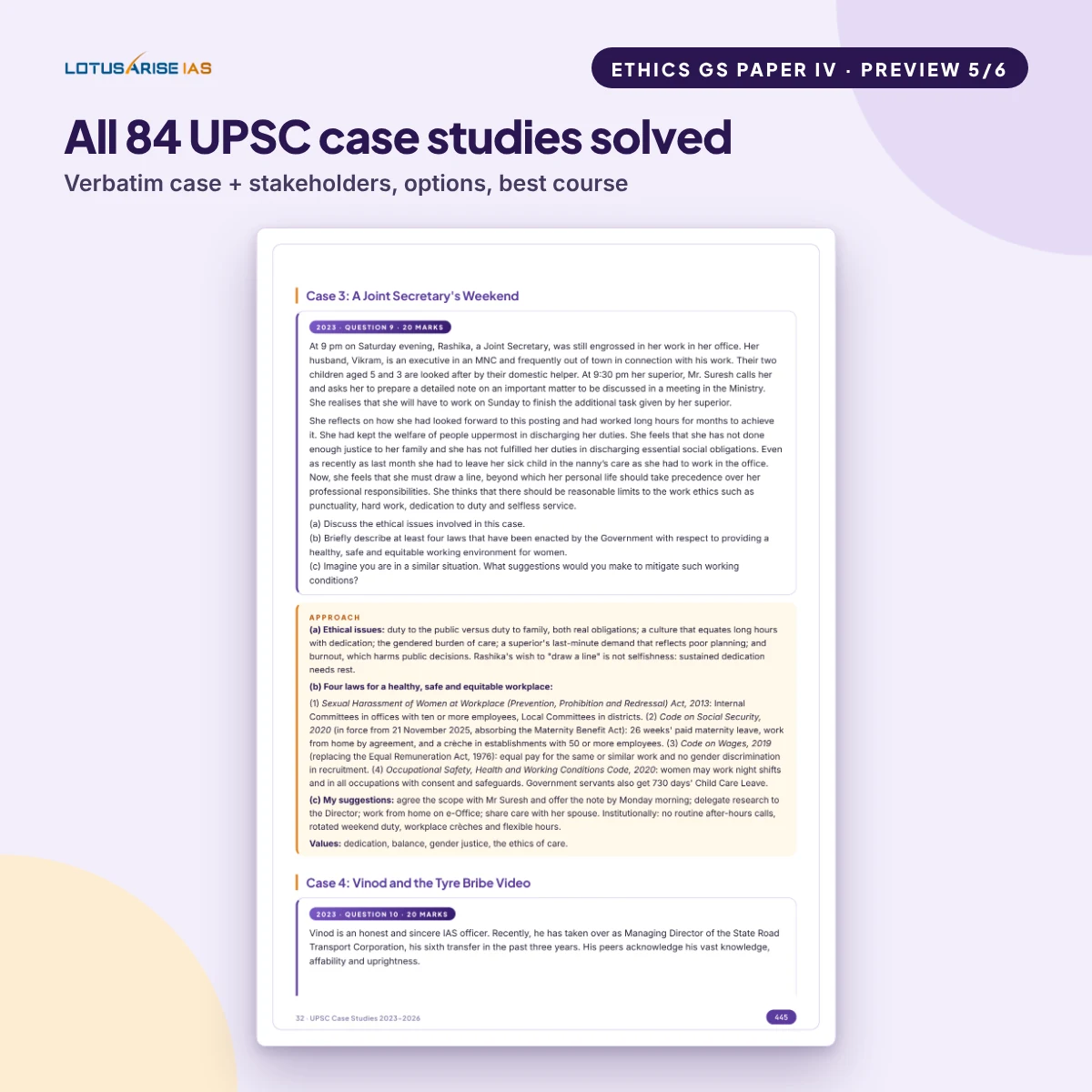
🧩 All 84 UPSC case studies (2013–2026) solved — each case verbatim, then stakeholders, dilemmas, options and the best course of action
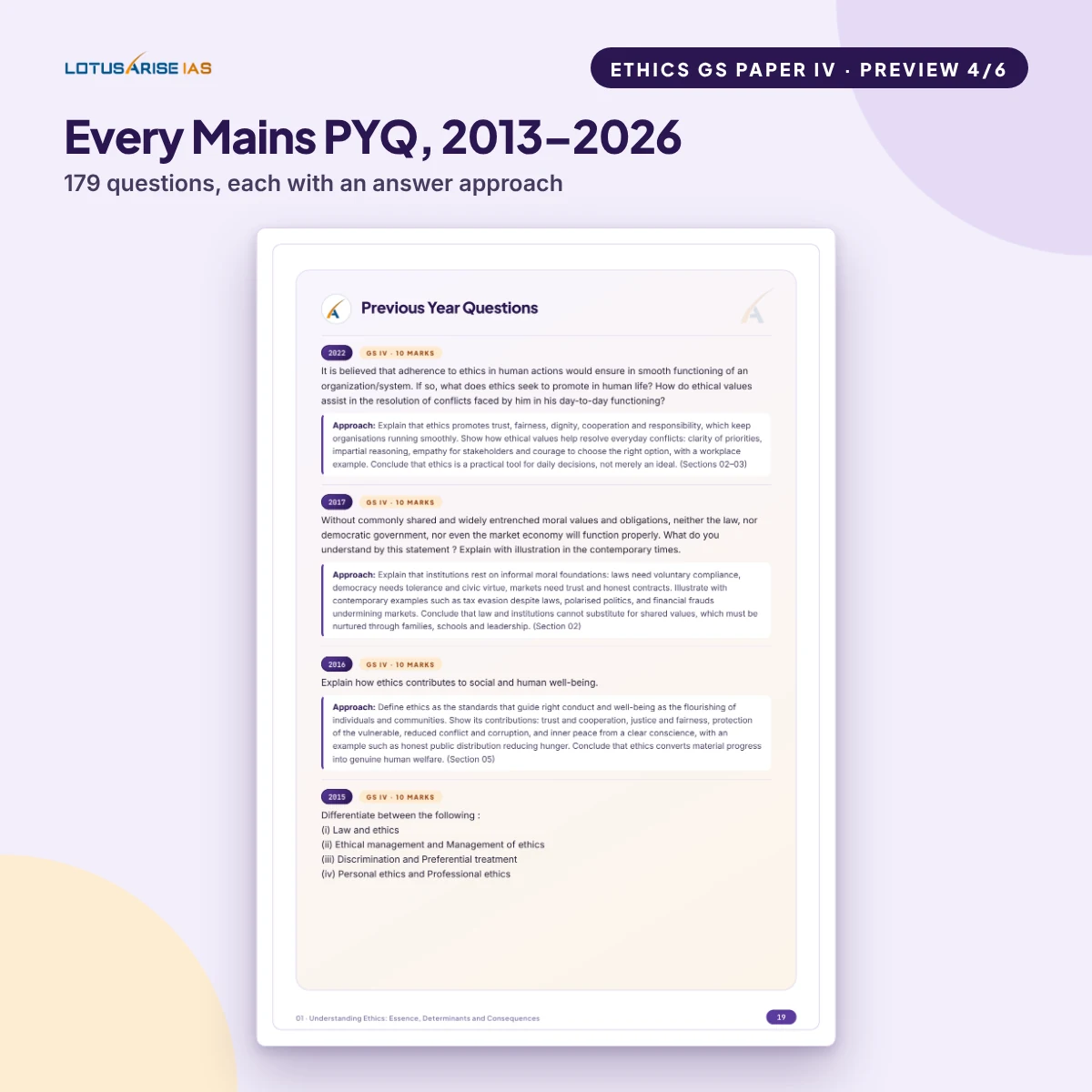
📝 179 Mains PYQs (2013–2026) — every Section A question with an answer approach, placed under the chapter that answers it
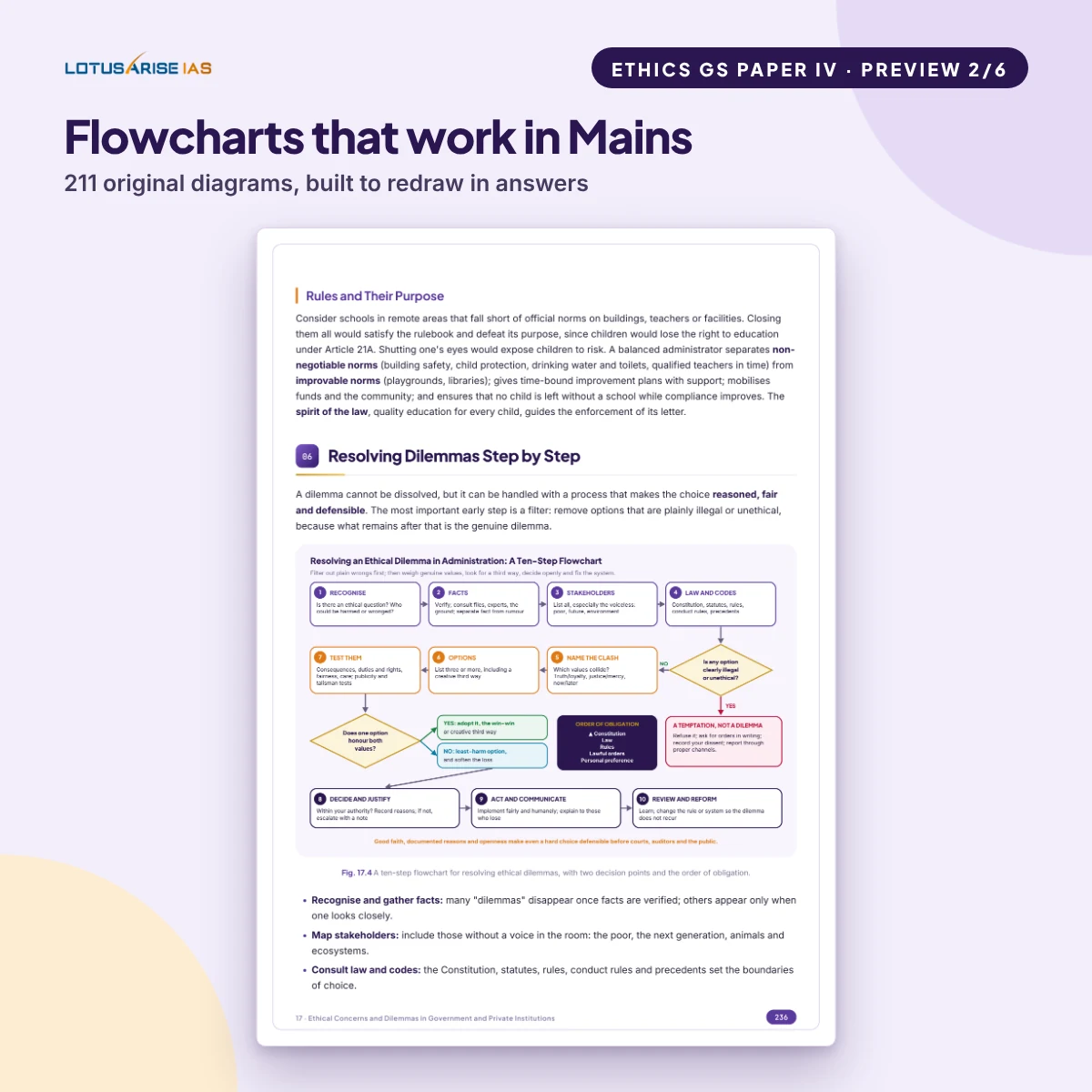
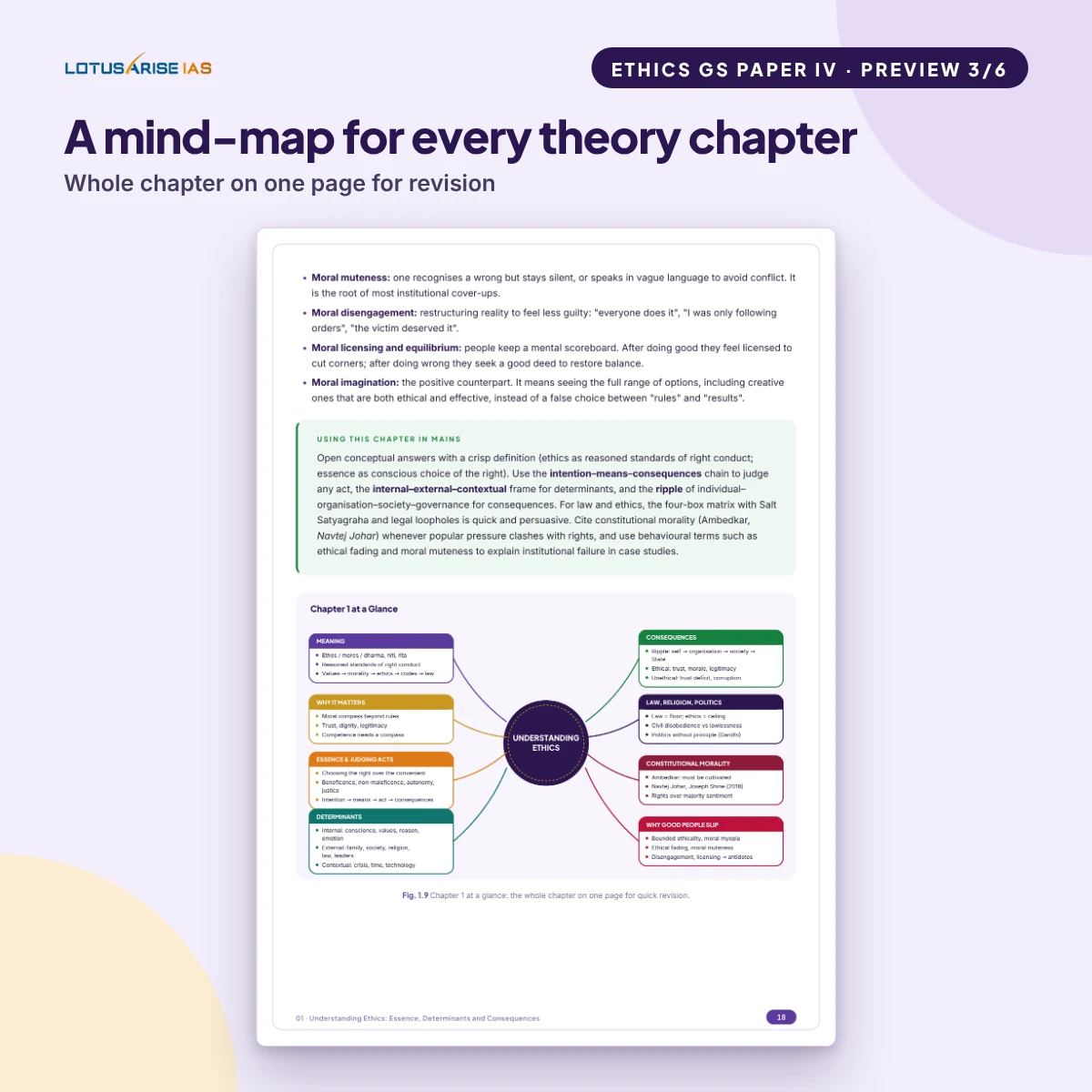
🎨 211 original diagrams and flowcharts + a mind-map for every theory chapter — simple enough to redraw in your answers
📱 Instant PDF download, updated to October 2026 — laptop, mobile or tablet, offline, printable
One-time payment. No subscription. Unlimited downloads — the link does not expire.
⭐ Read by 300,000+ UPSC aspirants every month on LotusArise IAS
Features:
- Comprehensive Coverage
- Complete Syllabus
- Suitable for: UPSC & State PSCs exams
- Format: Digital PDF (Downloadable)
- 337,362+ aspirants visit every month
The problem nobody admits about GS Paper IV
Ask an aspirant a month before Mains how ready they are for Ethics, and the honest answer is “I’ll manage”. Push a little, and you hear one of three things:
“I’ve read the theory twice. But when I sit with a case study, I don’t know whether to start with stakeholders, values or options — and I run out of time.”
“My notes define integrity, probity and objectivity. They don’t tell me what an honest officer actually does when a minister’s office calls.”
“I have three PDFs on thinkers, a folder of topper copies and a Telegram list of quotes. None of it is connected to the questions UPSC actually asks.”
These are not knowledge problems. Most aspirants have read enough ethics. What they lack is a system that joins the theory to the questions and the case studies. Ethics, Integrity and Aptitude Notes for UPSC is that system, in one book.
Why GS Paper IV deserves a proper book
GS Paper IV carries 250 marks — as many as any other GS paper — and in recent papers the six case studies alone carry 120 of them. It is also the paper where preparation pays back most reliably: the syllabus is short, it barely changes, and the same ideas (conscience, accountability, conflict of interest, constitutional morality) return year after year in new situations.
The same material feeds your Essay, your GS Paper II answers on governance and transparency, and your Interview, where boards routinely test ethical judgement with a situation. The real challenge is not the subject. It is having one source that explains the concept, shows how UPSC has asked it, and trains you to decide a case under time pressure.
What’s inside
⚖️ The complete notes — 34 chapters in 10 units, 495 pages
Every line of the GS Paper IV syllabus, in the order it is best learnt:
- Ethics and Human Interface — essence, determinants and consequences of ethics; ethical theories; private and public relationships; human values and the role of family, society and education; lessons from great leaders, reformers and administrators
- Attitude — content, structure and function; moral and political attitudes; social influence, persuasion and nudges
- Aptitude and Foundational Values — integrity, impartiality, non-partisanship, objectivity, dedication, empathy, tolerance and compassion
- Emotional Intelligence — models and measurement; EI in administration, crisis and conflict
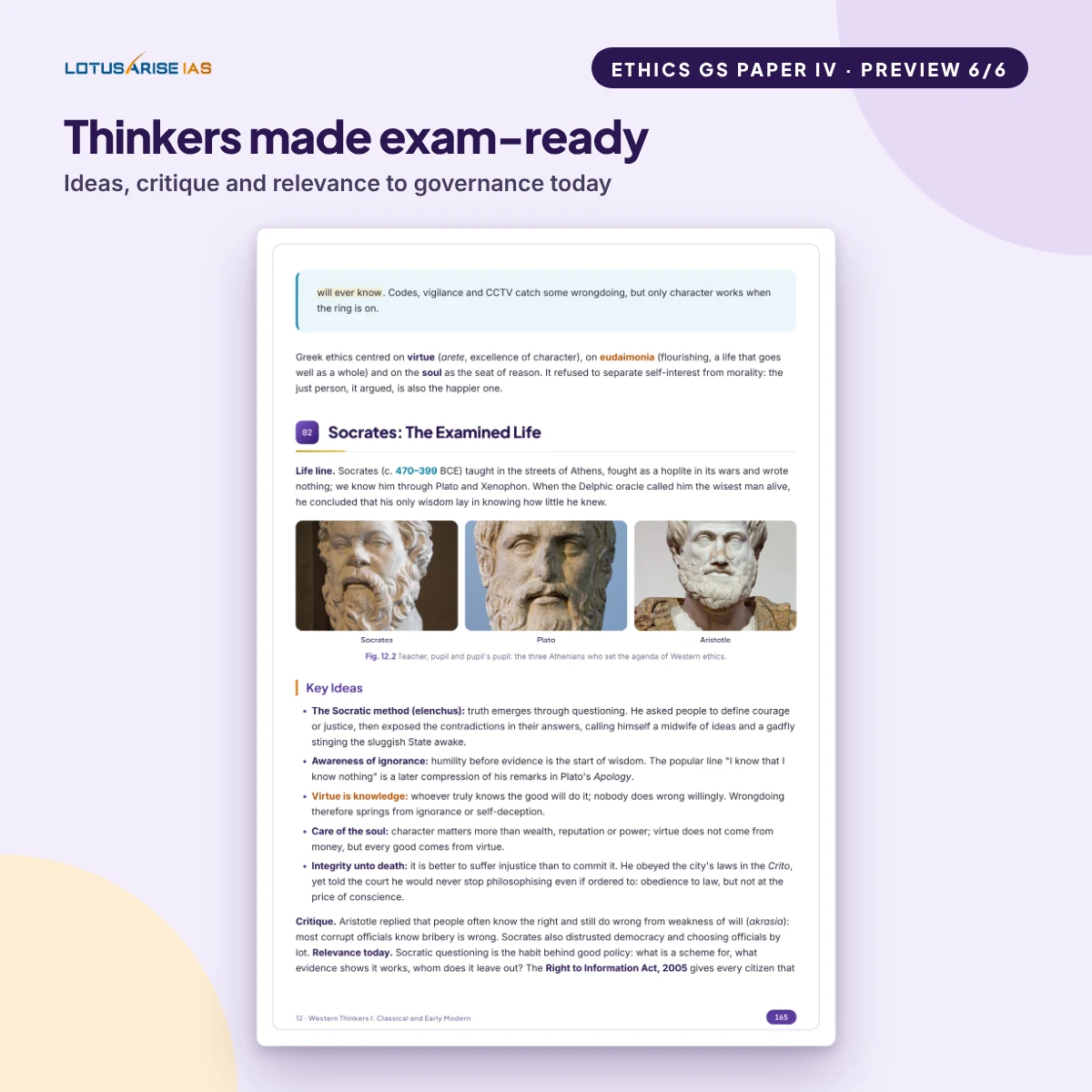
- Moral Thinkers and Philosophers — from Socrates, Aristotle, Kant, Mill, Rawls and Arendt to the Gita, Buddha, Kautilya, Thiruvalluvar, Gandhi, Ambedkar and Sen
- Ethics in Public Administration — status and problems; dilemmas in government and private institutions; laws, rules and conscience; accountability and ethical governance; international relations and funding; corporate governance
- Probity in Governance — public service and its philosophical basis; transparency and RTI; codes of ethics and conduct; citizen’s charters and work culture; public funds and corruption
- Contemporary and Applied Ethics — AI, data and media ethics; bioethics, environmental and social ethics
What makes this different from downloaded PDFs: every chapter is written fresh for the exam and current to October 2026 — the Section 17A split verdict, the DPDP Rules, the Harish Rana passive euthanasia judgment, the new labour codes and the latest corruption data are already in their chapters. Facts were checked independently against primary sources. Each theory chapter ends with a one-page mind-map for revision and a “Using this chapter in Mains” box that tells you how to turn it into marks.
🧩 All 84 UPSC case studies, 2013–2026, solved
Every case study UPSC has set since the paper began, reproduced word for word, year by year. Under each one: the stakeholders, the ethical issues and dilemmas, the options with their merits and limits, the best course of action step by step, and the values, laws and judgments worth citing. A separate chapter teaches the method — a seven-step approach, stakeholder maps, an options matrix and tests to check your decision — with a fully worked demonstration case.
Case studies are where GS IV is won or lost. Seeing all 84 answered the same disciplined way is the fastest way to build your own.
📝 179 Mains PYQs, 2013–2026
Every Section A question from fourteen papers, verbatim, with its marks and a short answer approach that points to the section of the book that answers it. Each question sits under the chapter it belongs to, so you finish a topic and immediately see how UPSC has tested it.
🎨 211 original diagrams and flowcharts
The anatomy of an ethical act, a dilemma-resolution flowchart, the ABC model of attitude, Goleman’s model of emotional intelligence for officers, the RTI request-to-appeal path, the anti-corruption architecture and many more — each drawn fresh and simple enough to reproduce in a 150-word answer. Thinkers and role models come with portraits.
💬 Quotes Bank and Examples Bank
A theme-wise Quotes Bank with checked wording and attribution, plus every “what does this quotation mean to you” PYQ with an approach. An Examples Bank of real administrators, citizens, judgments and reforms, sorted by value and linked to the chapter where each is discussed — the material that lifts an average answer into a good one.
The aspirant who buys this
First-time aspirants — you want one trusted book for Paper IV from day one, instead of collecting theory, thinkers and case studies from five places.
Repeaters stuck around 90–100 in GS IV — you know the theory. What costs you marks is structure and speed in the case studies. Eighty-four solved cases and a clear method fix exactly that.
Aspirants with Philosophy, PSIR or Sociology optional — the thinkers and governance chapters overlap with your optional and your Essay.
Self-study aspirants outside Delhi, Prayagraj or Jaipur — no classroom, no batch timings; one PDF on your phone that covers the whole paper.
State PSC aspirants — many State PSCs now have an ethics paper built on a similar syllabus, so the same book serves both.
Why not just use free notes and topper copies?
Free ethics material exists, and most aspirants have folders full of it. The problem is not that it is bad. It is that it is scattered and dated: definitions in one file, thinkers in another, case studies answered in a dozen different styles, and laws and judgments that have since changed.
This book is one connected system: the whole syllabus in sequence, every PYQ placed where it belongs, every case study answered with the same method, and facts checked to October 2026.
If you have the time and discipline to build that system yourself from scattered sources, you may not need this. If you want it already built — open it and start — this is what the book is for.
Price and delivery
A single printed ethics guide usually costs more than this PDF, and a printed book cannot carry developments up to October 2026.
MRP ₹500 → ₹295 for 495 pages — about 60 paise a page.
Want to see it first? Download the free sample PDF — the cover, the full contents, Chapter 1 and the complete 2023–2026 case-study chapter.
One-time payment. No subscription. No recurring charge.
Instant PDF download after payment. The download link is also sent to your email — please check the spam folder if it does not arrive in a few minutes. Download it again any time from My Account.
For support: support@lotusarise.com
Related products
-

-
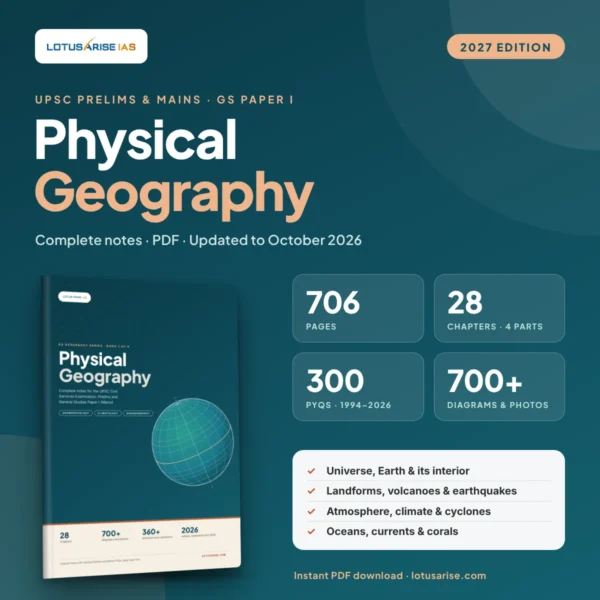
Physical Geography Notes for UPSC: Prelims & Mains GS Paper I (2027 Edition) by LotusArise IAS
Original price was: ₹500.00.₹236.00Current price is: ₹236.00. -
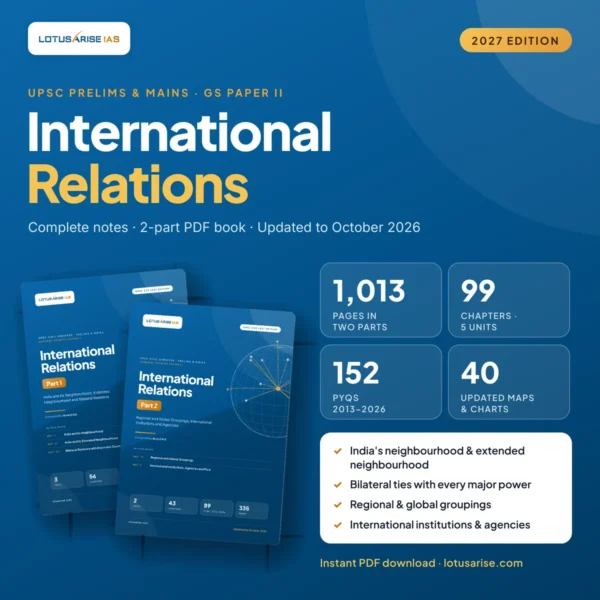
International Relations Notes for UPSC: Prelims & Mains GS Paper II (2027 Edition) by LotusArise IAS
Original price was: ₹500.00.₹236.00Current price is: ₹236.00. -