

Geography Optional Strategy Kit: Syllabus, PYQs (1986–2026), Study Route & Interlinking Guide by LotusArise IAS
Original price was: ₹500.00.₹236.00Current price is: ₹236.00.
₹236 launch price · regular ₹500 — 337 pages.
Most Geography Optional aspirants start at unit 1 and read straight down the syllabus. Twenty units, twenty separate boxes. They know Köppen and they know the monsoon — but in a 15-mark answer they cannot bring Paper I theory to a Paper II question. And they have never counted what UPSC asks from each unit.
Geography Optional Strategy Kit fixes the plan before you read another page.
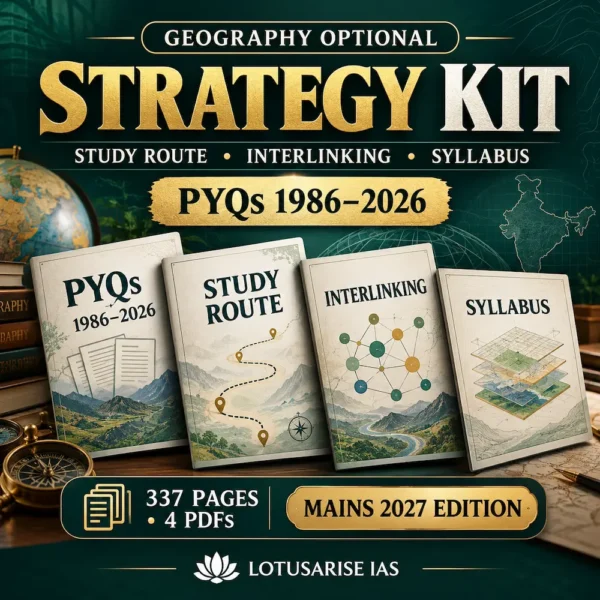
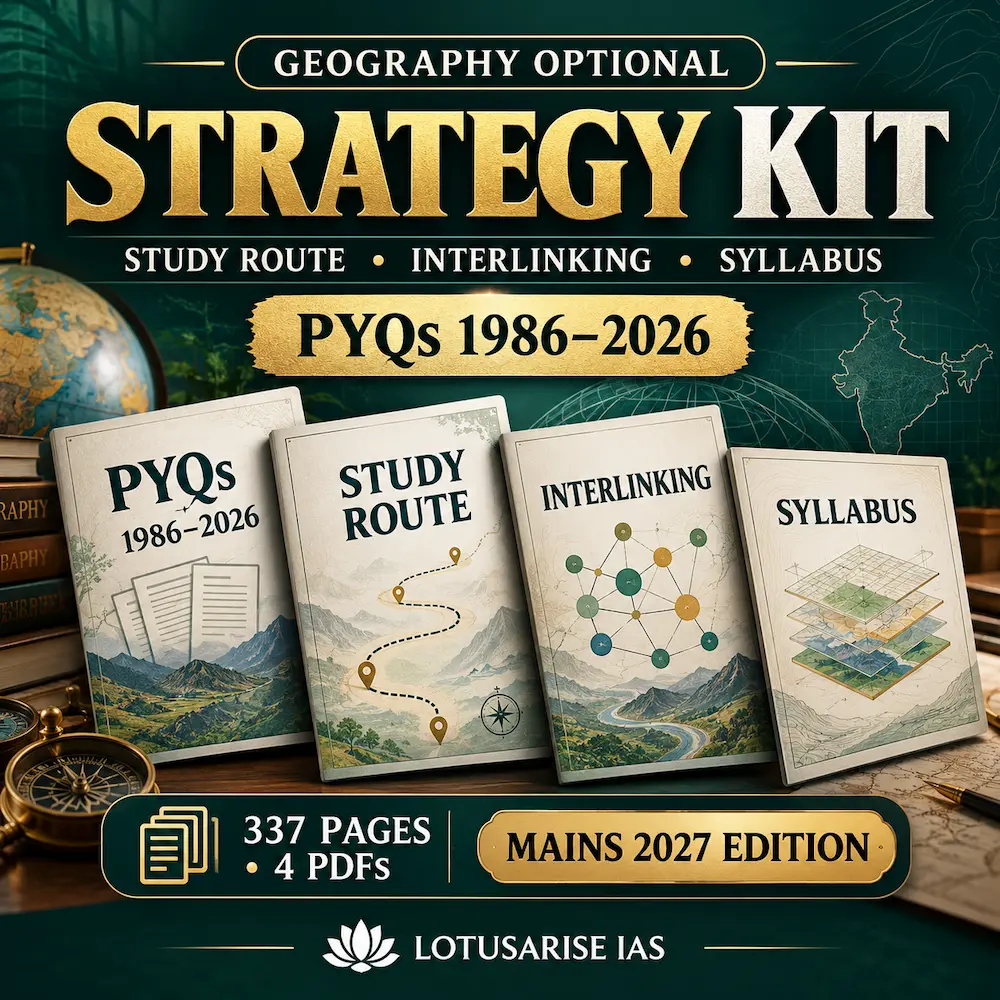
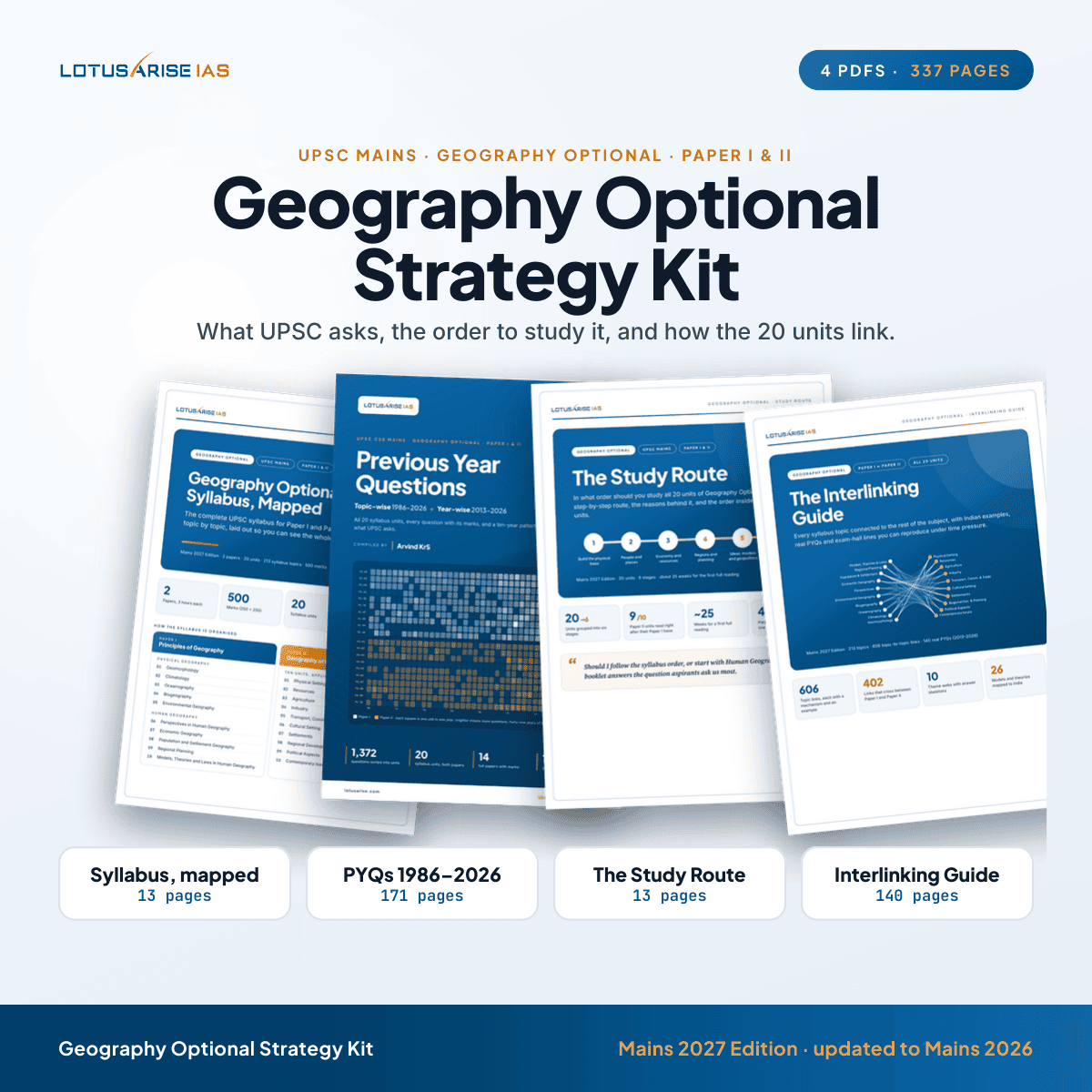
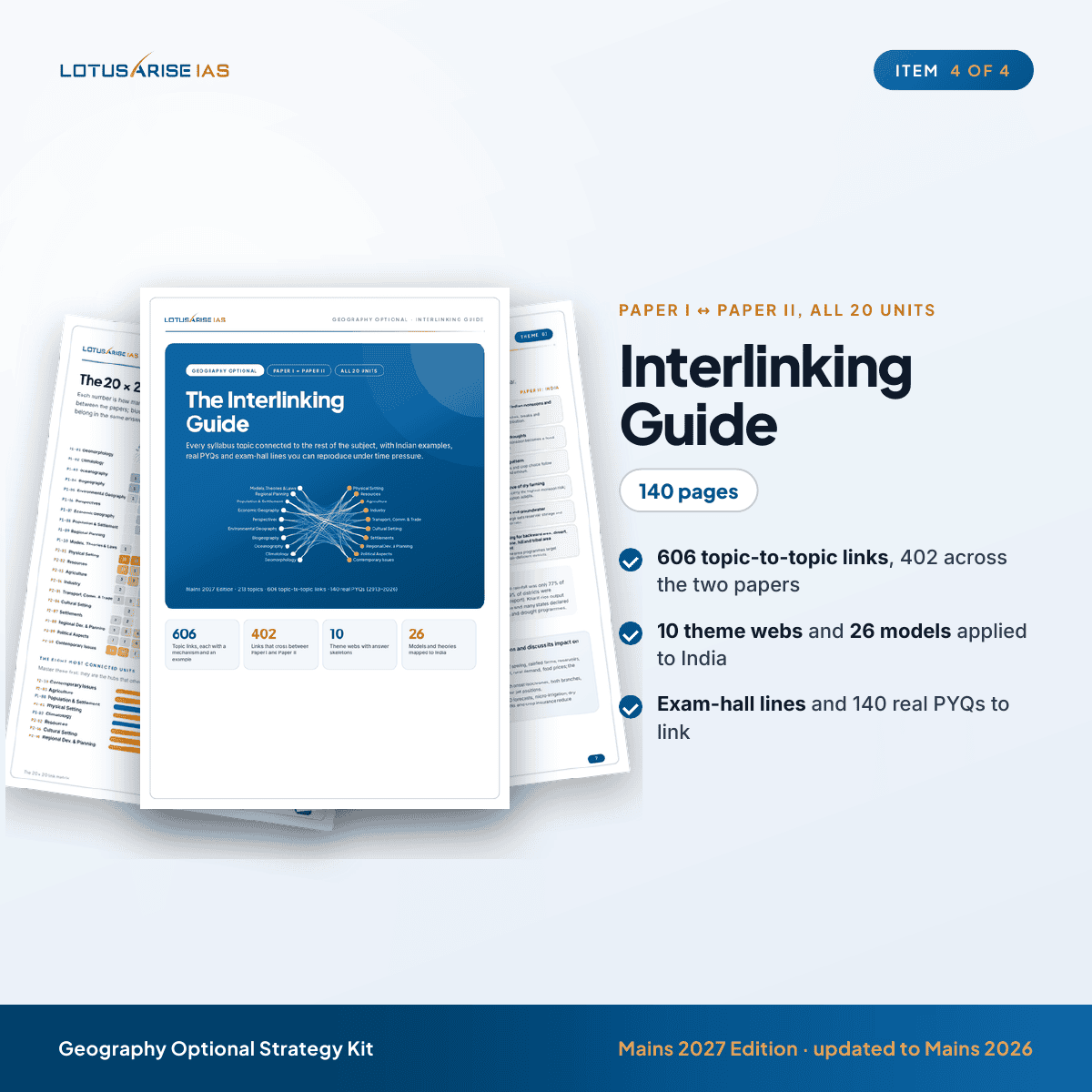
🔗 Interlinking Guide (140 pages) — 606 topic-to-topic links, 402 of them across Paper I and Paper II, each with an Indian example
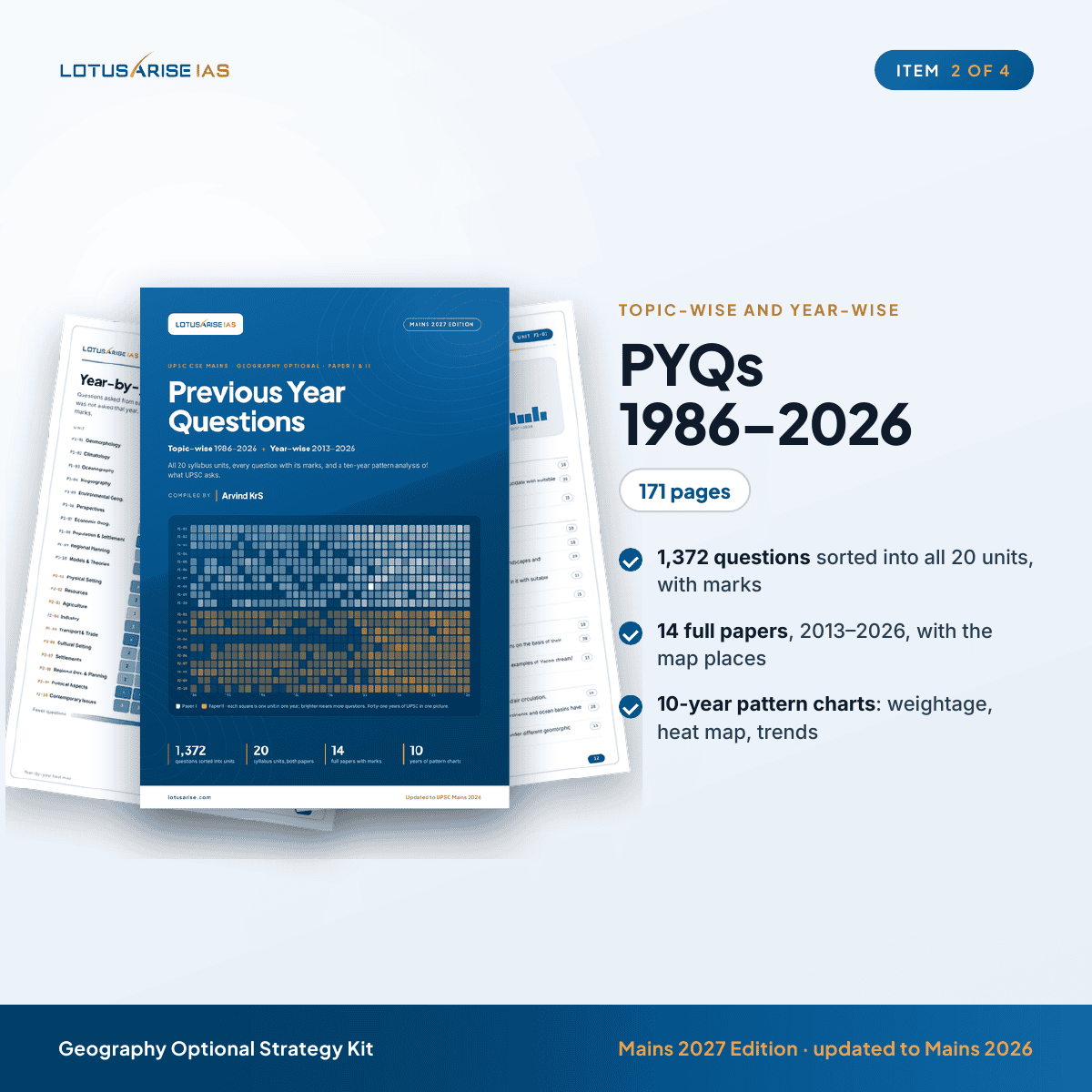
📜 PYQs 1986–2026 (171 pages) — 1,372 questions sorted into all 20 units with marks, plus 14 full papers from 2013 to 2026
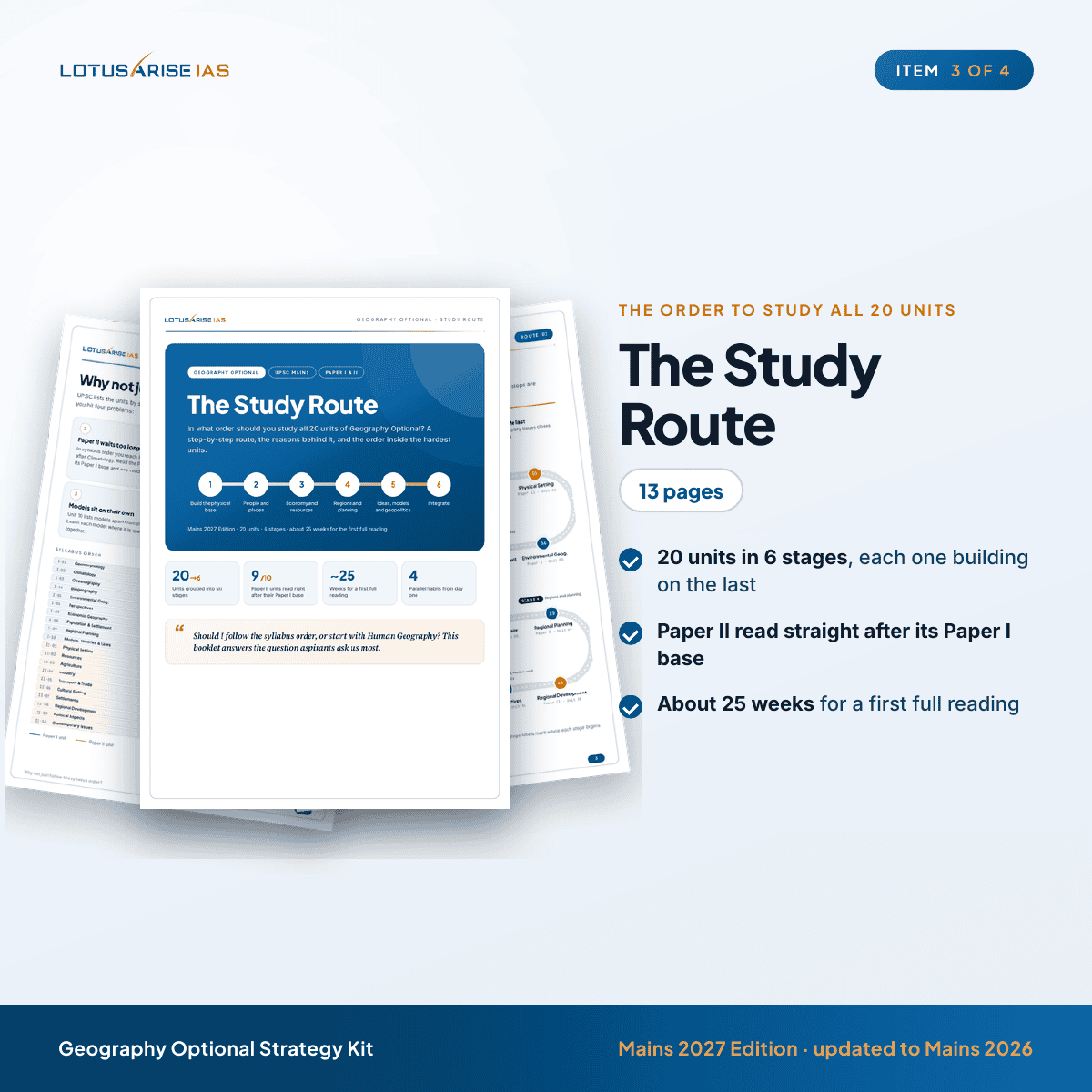
🧭 Study Route (13 pages) — the order to study all 20 units, in 6 stages, so each unit builds on the last
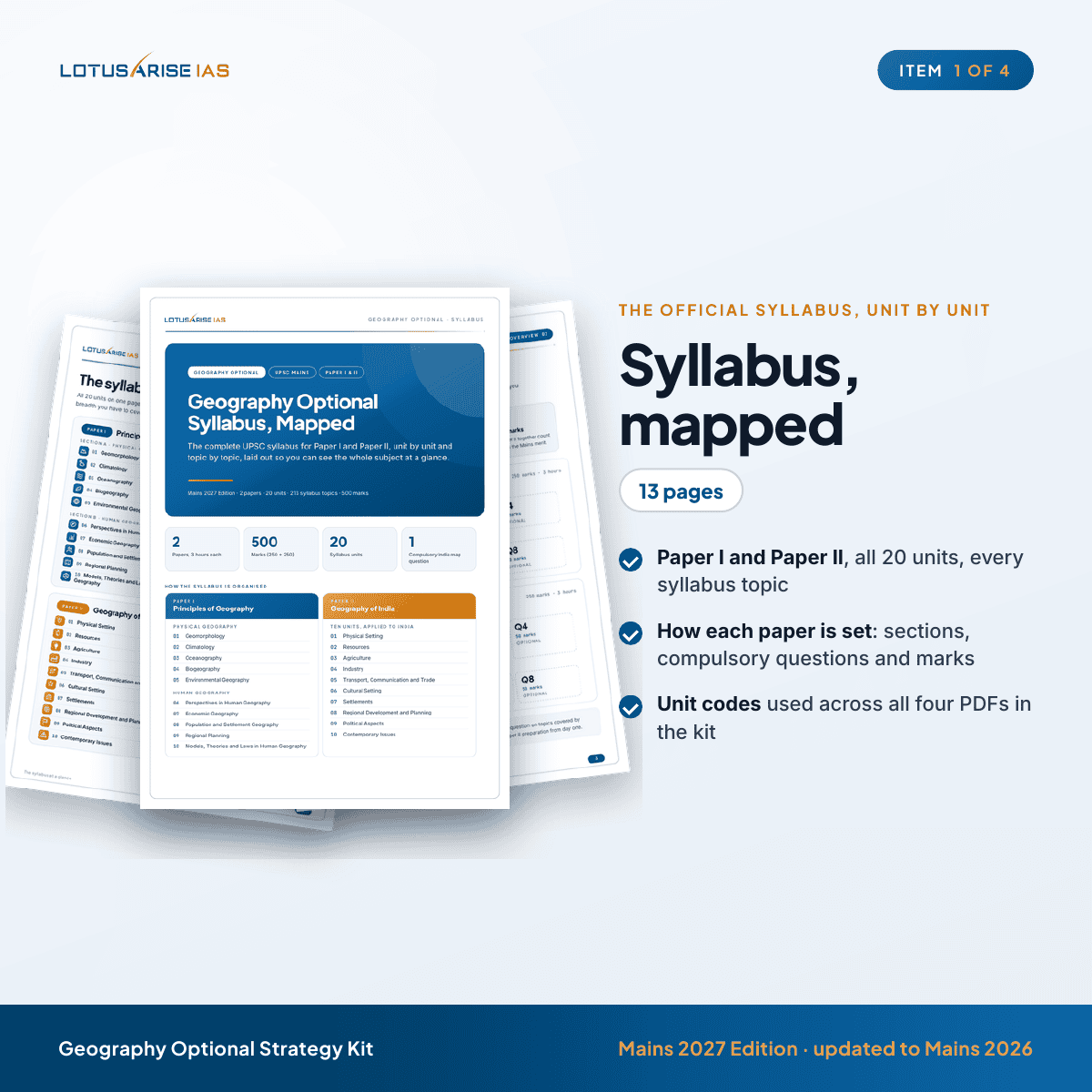
📊 10-year pattern charts + Syllabus infographic (13 pages) — what each unit is worth, every topic laid out
📱 4 PDFs, instant download — laptop, mobile or tablet, and printable
Mains 2027 Edition, updated to Mains 2026.
One-time payment. No subscription. Download links reach your email the moment payment clears.
⭐ Trusted by the 300,000+ UPSC aspirants who read LotusArise IAS every month
Features:
- Comprehensive Coverage
- Complete Syllabus
- Suitable for: UPSC & State PSCs exams
- Format: Digital PDF (Downloadable)
- 337,362+ aspirants visit every month
The problem most Geography Optional aspirants don’t talk about
Ask any Geography Optional aspirant three months into preparation what is going wrong. They won’t say the subject is dull. They won’t say there is too much to read. They will say one of three things:
“I finished Geomorphology and Climatology, and I still don’t know what to read next — the syllabus order or Human Geography first.”
“I know the theories. I know India. But in the exam hall I write them as two separate answers, and the examiner wants one.”
“I have the question papers, but I have never worked out which units UPSC keeps coming back to — so I give every unit the same time.”
These are not personal failings. Most aspirants already have the content. What is missing is the plan: what UPSC asks, in which order to learn it, and how the 20 units connect. Geography Optional Strategy Kit is that plan, in four PDFs.
Why the plan matters more than one more book
Geography Optional is 500 marks — two papers of 250. Both papers are built from the same 20 units, and Paper II asks you to apply Paper I to India. That is where the marks are won and lost. A Paper II question on the monsoon rewards the aspirant who brings in jet streams from Climatology. A question on urban sprawl rewards the one who brings in Christaller and rank-size from Paper I.
The pattern is also steadier than most aspirants think. Across the last ten papers (2017–2026), 18 of the 20 units were asked every single year, and the other two in nine of the ten. There is no safe unit to skip. There is only a smart order to learn them in, and a way to link them.
The challenge is not the subject. It is having a system that turns 20 units into one subject.
What’s inside
🔗 Interlinking Guide — 140 pages
The part of the kit no free PDF covers. Every one of the 213 syllabus topics, connected to the rest of the subject:
- 606 topic-to-topic links, each with the mechanism (why the two topics connect) and a concrete, verifiable Indian example
- 402 links that cross between Paper I and Paper II — the connections aspirants miss most
- The L-I-N-K method — a 60-second routine to link any question before you write
- A 20 × 20 link matrix — which units depend on which, at a glance
- 10 theme webs — the Monsoon, water and river interlinking, the Himalaya, coasts and the Indian Ocean, urbanisation, food security, energy transition, hazards, climate change, tribal and backward regions — each with an answer skeleton
- 26 models applied to India — Malthus, the demographic transition, Christaller, Weber, Rostow, Perroux and more, each with an Indian case and where India breaks the model
- 20 unit link sheets — top links, topic-by-topic connections, and ready opening and closing lines for the exam hall
- 140 real PYQs (2013–2026) that reward linking, with where each link goes in the answer
What makes this different from free notes: notes explain one topic at a time. This guide exists only to connect them — which is exactly what a 15- or 20-mark answer is marked on.
📜 PYQs Topic-wise 1986–2026 — 171 pages
- 1,372 questions sorted into all 20 syllabus units, newest first
- Marks against every question, including the older 300-mark papers
- 14 full year papers, 2013–2026, Paper I and Paper II as set, with sections, marks and the map places
- Ten-year pattern charts (2017–2026): unit weightage by questions and marks, a year-by-year heat map, rising and cooling units, question size by unit, and a unit scorecard
What makes this different from free question papers: a year-wise paper tells you what was asked in one year. Topic-wise lists with marks tell you how UPSC asks each unit, and how much it is worth.
🧭 Study Route — 13 pages
The answer to the question aspirants ask most: syllabus order, or something else?
- All 20 units reordered into 6 stages — physical base, people and places, economy and resources, regions and planning, ideas and geopolitics, integration
- Each Paper II unit read straight after its Paper I base, so one reading serves both papers
- The reason for every step, and what each unit is the base for
- About 25 weeks for a first full reading, with the parallel habits to start from day one
🗺️ Syllabus Infographic — 13 pages
The official Paper I and Paper II syllabus laid out unit by unit and topic by topic, with the unit codes used across the whole kit — so the syllabus, the route, the PYQs and the links all speak the same language.
The aspirant who buys this
First-timers — you have picked Geography and want to start right. The route tells you where to begin, the PYQs show what each unit is worth, and the links are built in from week one instead of patched in at the end.
Repeaters who scored 230–260 in the optional — the content is there. What costs you marks is answers that stay inside one unit. The Interlinking Guide is built for exactly that gap.
Aspirants who have finished their notes — you have read everything once. Use the PYQs to prioritise revision and the guide to connect what you have read before the next test.
Self-study aspirants outside Delhi, Prayagraj and Jaipur — the planning that coaching builds into its classroom programme, in four PDFs you can work through on your own schedule.
Working professionals — no batch, no schedule, no validity clock. Open the route, see this week’s unit, and read.
Why not just use free PDFs from Telegram?
Free material exists, and plenty of it is good. You can find the syllabus on the UPSC website and old papers in any Telegram group. Most aspirants already have gigabytes of both.
The difference is not the content — it is the system. A downloaded paper does not sort 40 years of questions into units with marks. A syllabus PDF does not tell you what to read after Geomorphology. And no free source maps 606 connections between the two papers with an Indian example for each.
If you have the time to build that system yourself — sort 1,372 questions, plan a 20-unit route and map every link — you may not need this. If you would rather open it and start, this is what the kit is for.
One plan, one price
Optional-subject courses cost ₹6,999–₹54,000 elsewhere, and the planning is buried inside them.
Geography Optional Strategy Kit: ₹236 (launch price, regular ₹500) — 337 pages
One-time payment. No subscription. No recurring charge. The four download links reach your email as soon as payment clears — check the spam folder if they are not in your inbox within a few minutes.
Want the content to link? Pair the kit with Geography Optional Complete Notes (₹1,180) and the Geography Optional 300+ Score Pack with solved PYQs (₹1,770).
Questions before or after buying: support@lotusarise.com
You may also like…
-

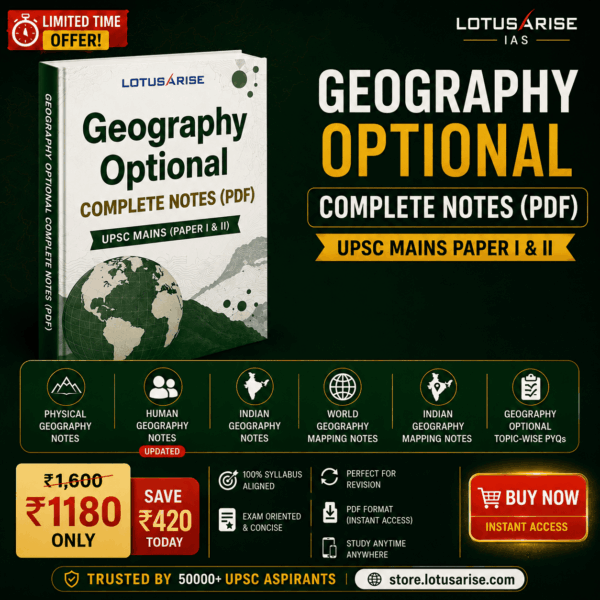
#OFFER: Geography Optional Complete Notes (PDF) – UPSC Mains (Paper I & II)
Original price was: ₹1,600.00.₹1,180.00Current price is: ₹1,180.00.