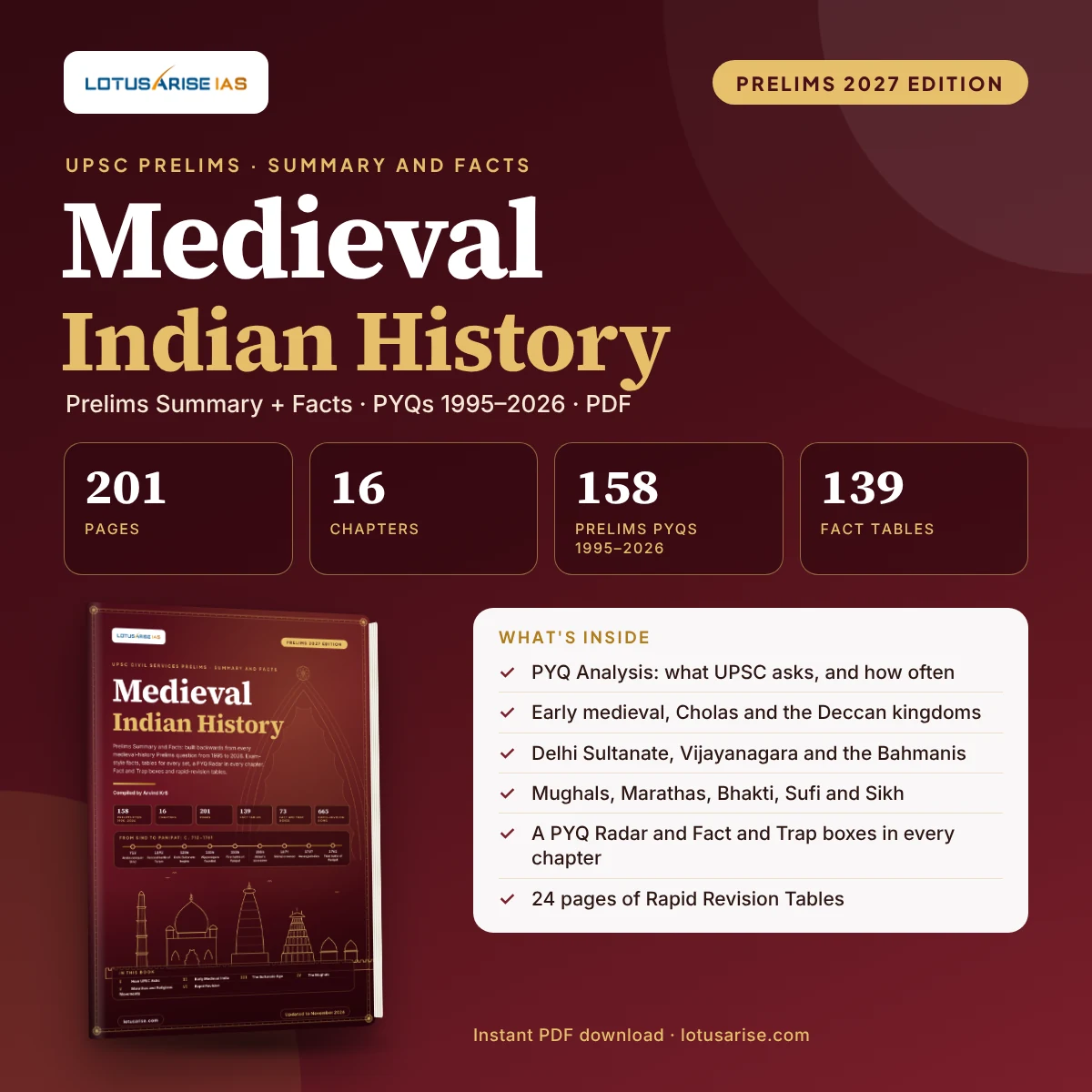


Medieval Indian History Prelims Summary Notes for UPSC: Facts and PYQs 1995–2026 (2027 Edition) by LotusArise IAS
₹149.00
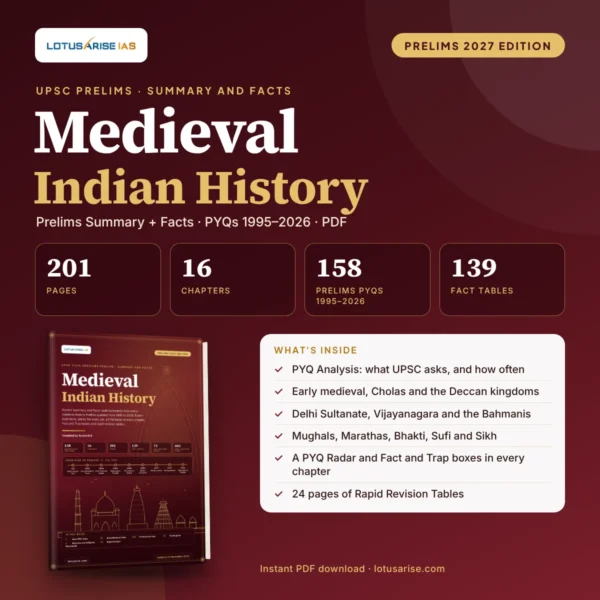
₹149 for the Prelims 2027 Edition — 201 pages, about 74 paise a page.
Most aspirants revise Medieval History by rereading 500 pages of notes in the last month. Every dynasty gets the same time. The Mughals and the Bhakti saints, which UPSC asks every few years, get no more attention than the Kadambas, which it has never asked.
Medieval Indian History Prelims Summary Notes turns this around: it starts from the questions.
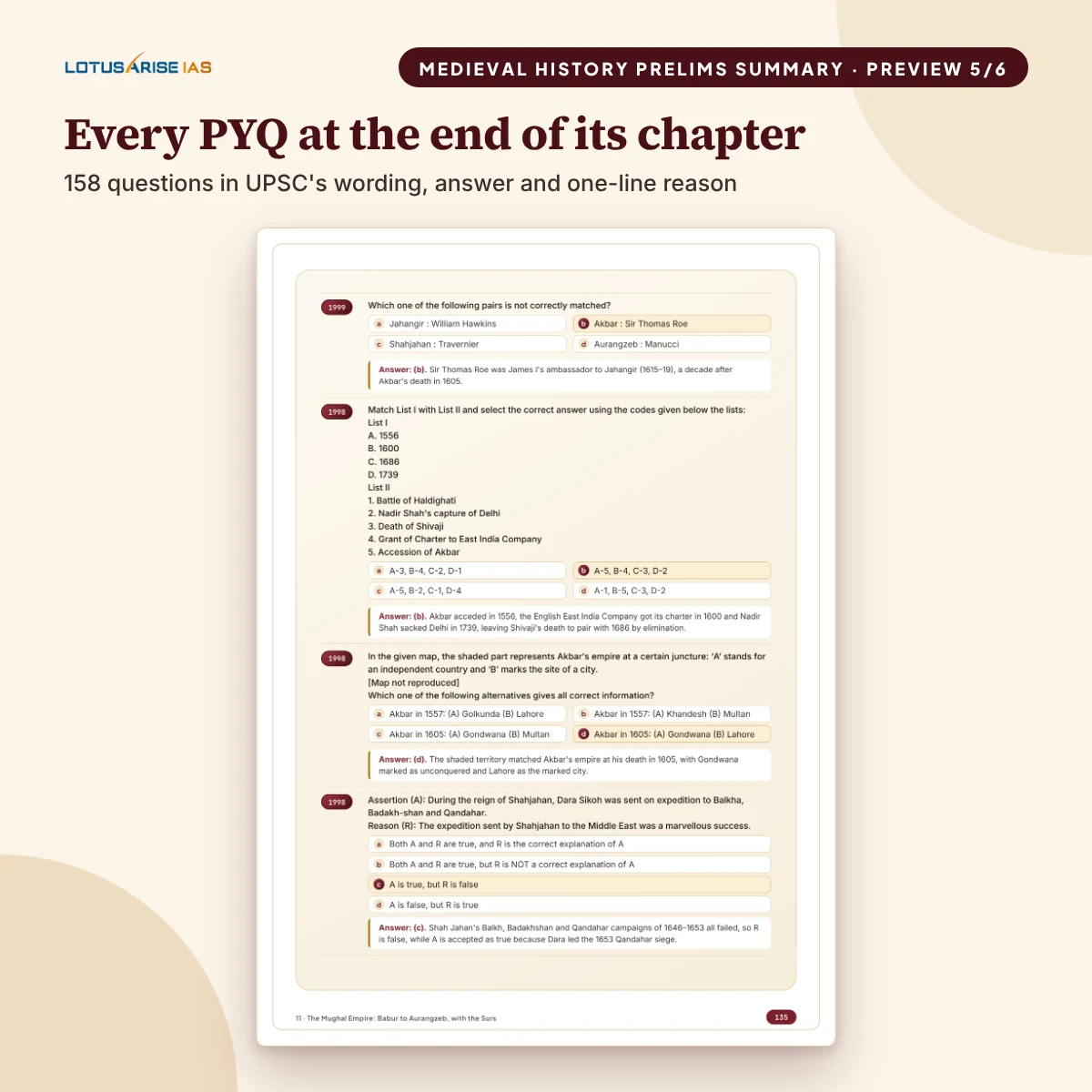
🎯 All 158 medieval Prelims PYQs, 1995–2026 — UPSC’s wording, answer marked, one-line reason, each at the end of the chapter that answers it
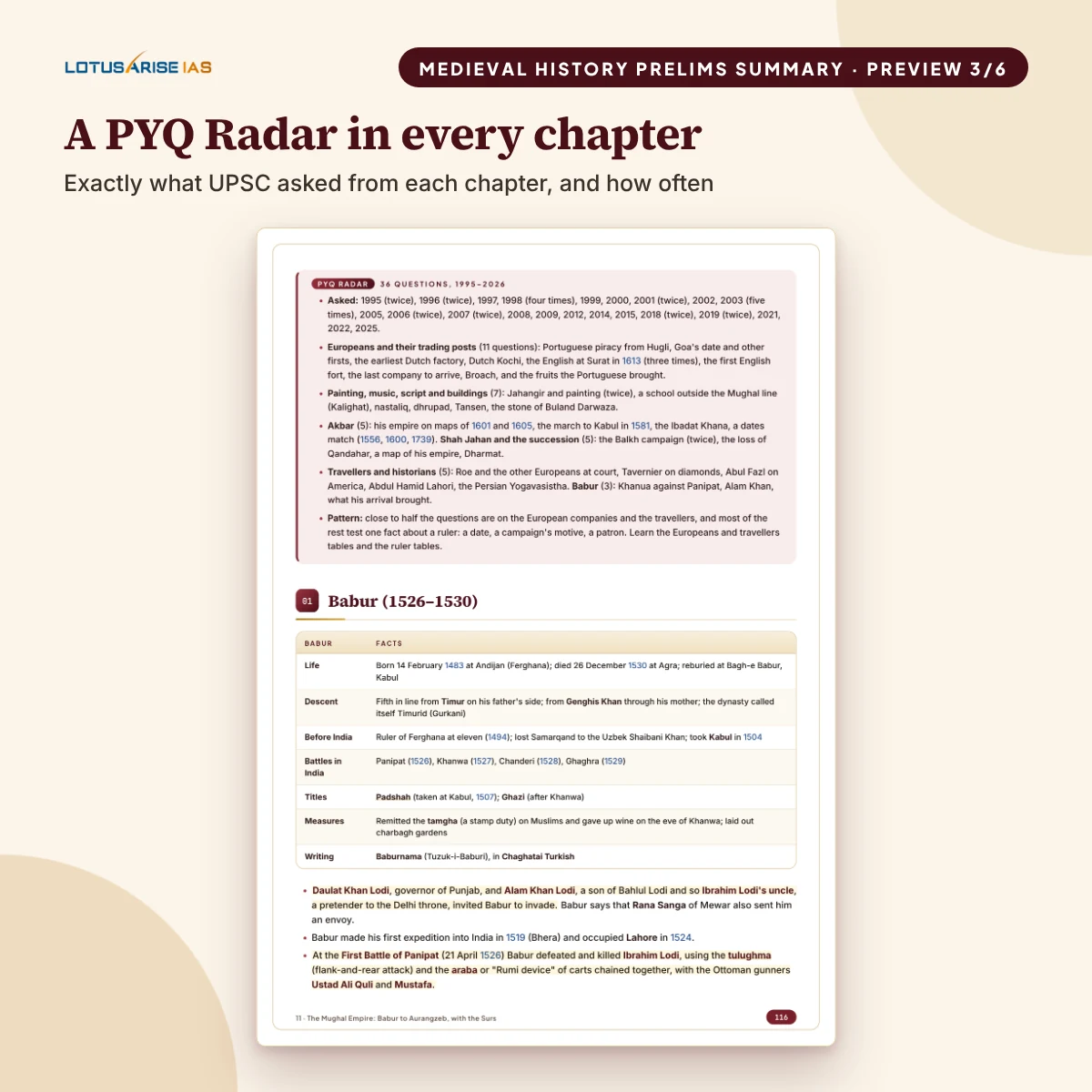
📡 A PYQ Radar opening every chapter — what UPSC asked from it, in which years, and which table to learn first
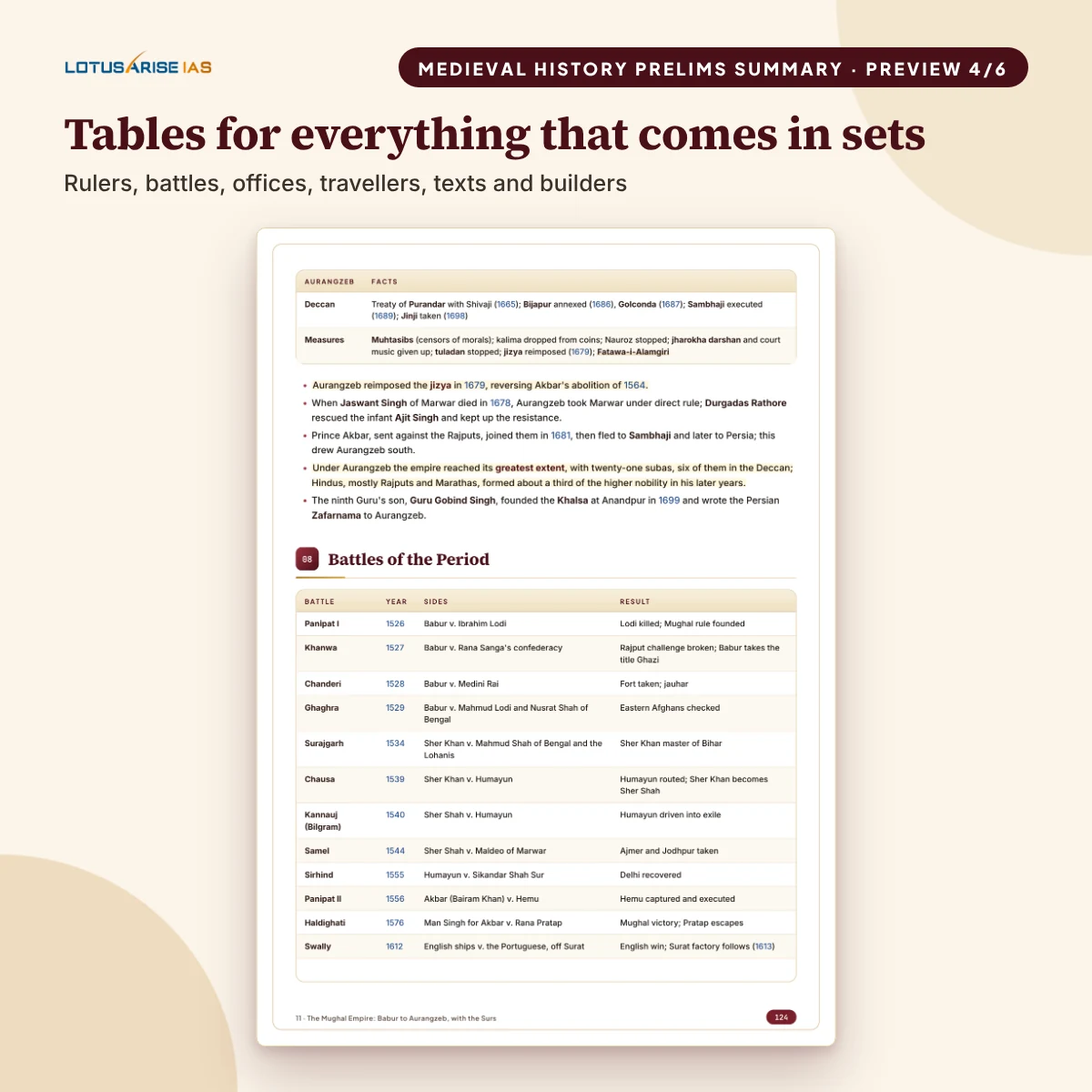
📋 139 fact tables and 73 Prelims Fact and Trap boxes — rulers, battles, offices, texts, travellers, temples and the look-alikes UPSC builds options from
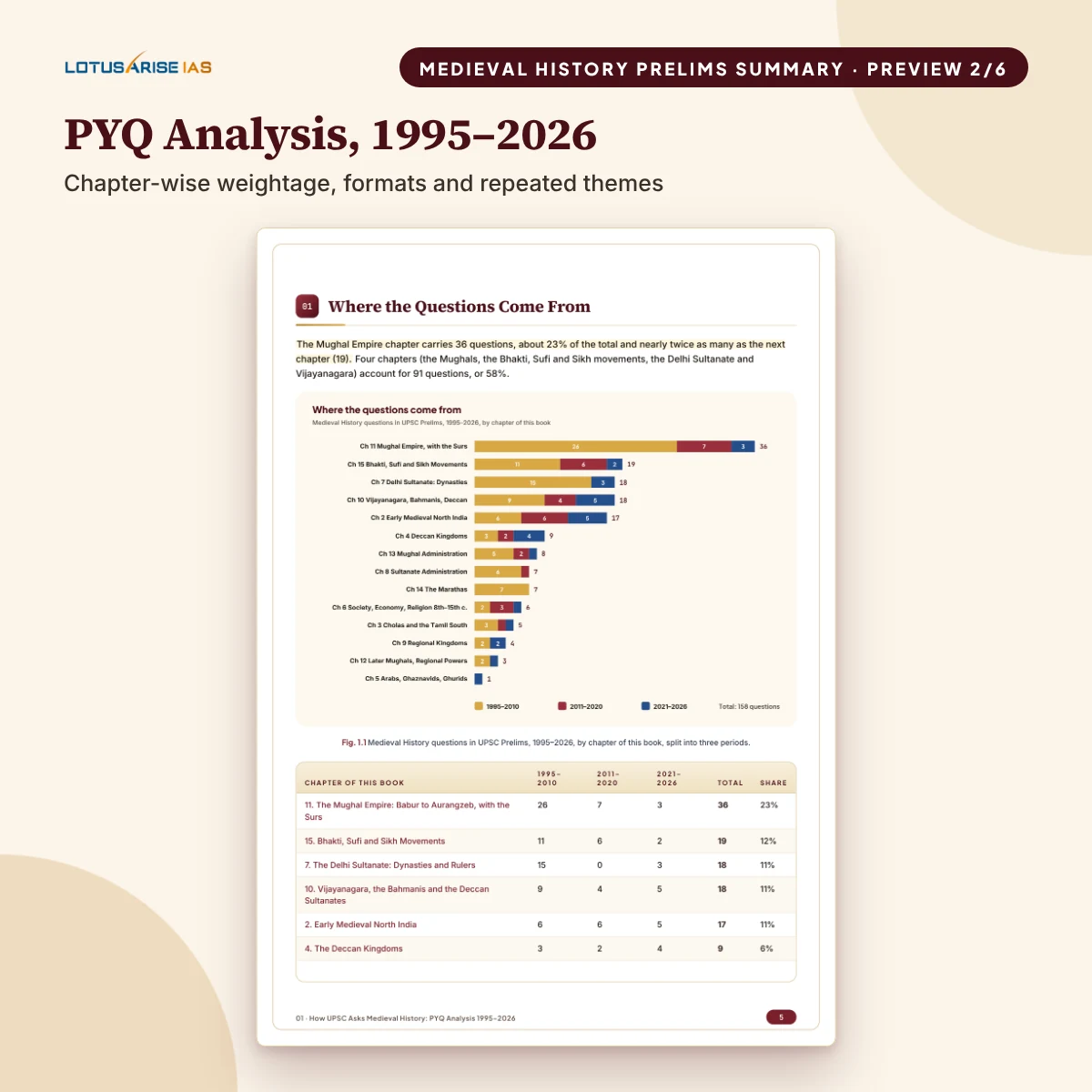
📊 PYQ Analysis chapter — chapter-wise weightage, how the question formats changed after 2011, and the facts asked twice or more
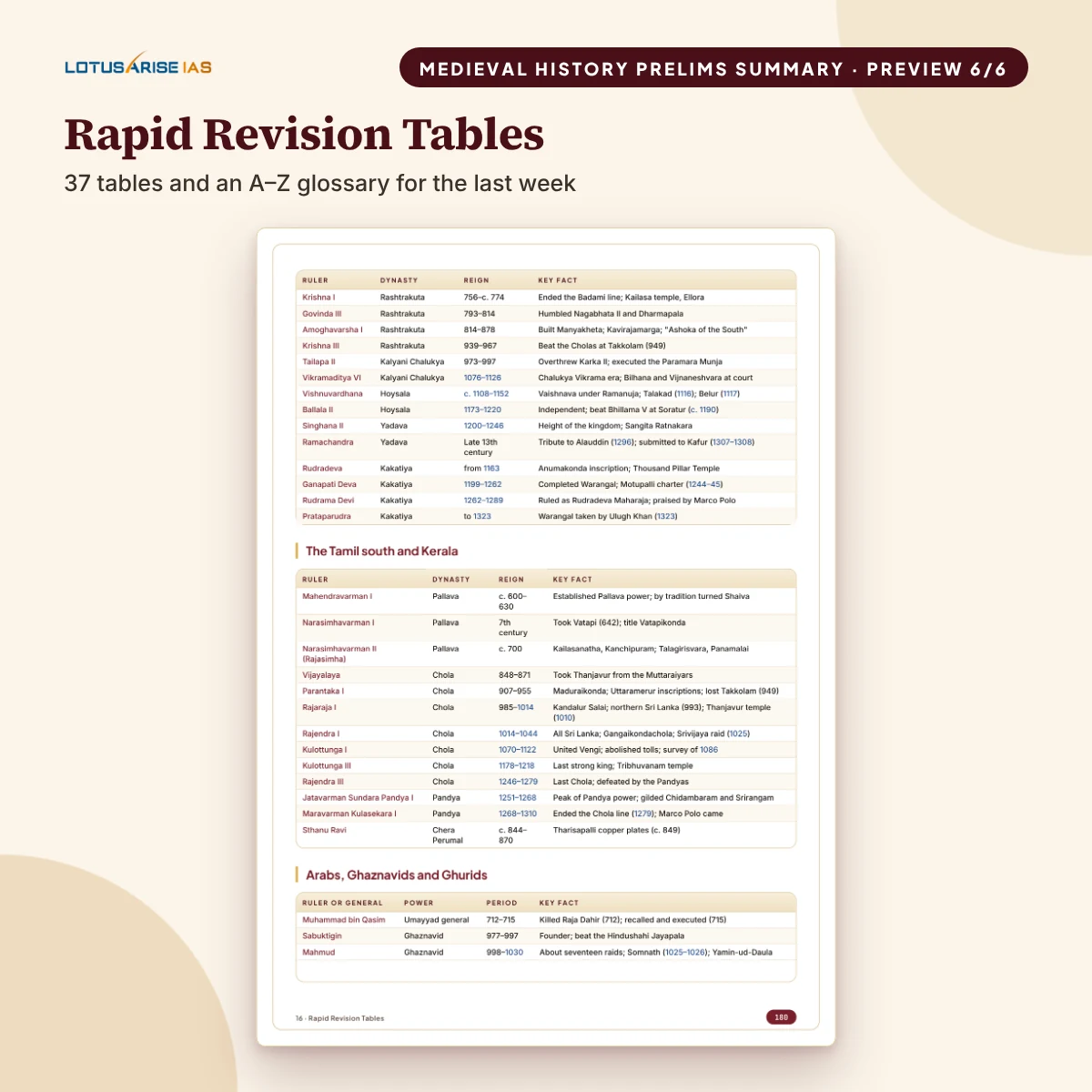
🗂️ 24 pages of Rapid Revision Tables — 37 tables and an A–Z glossary for the last week · instant PDF, any device
One-time payment. No subscription. Unlimited downloads — the link does not expire.
⭐ Read by 300,000+ UPSC aspirants every month on LotusArise IAS
Features:
- Comprehensive Coverage
- Complete Syllabus
- Suitable for: UPSC & State PSCs exams
- Format: Digital PDF (Downloadable)
- 337,362+ aspirants visit every month
The Medieval History problem nobody admits before Prelims
Ask an aspirant a month before Prelims how Medieval History is going. They will not say they haven’t read it. They will say one of three things:
“I’ve read the Palas, Pratiharas and Rashtrakutas three times. In the paper I still won’t know which one built Vikramashila.”
“I know the Mughals. It’s the Bhakti saints, the Sufi silsilahs and which traveller came under which king that keep slipping.”
“I have 500 pages of notes and four weeks. I can’t reread all of it, and I don’t know what to drop.”
None of these is a memory problem. Medieval India is a thousand years of dynasties, namesakes and look-alike terms, and most notes give every page the same weight. What is missing is a filter: a way to know which facts UPSC actually asks, and to revise those first. Medieval Indian History Prelims Summary Notes is that filter, built from the questions themselves.
Why the questions are the right place to start
Medieval History is a small slice of the Prelims paper: about six questions a year before 2011, about four since. That is exactly why it rewards targeted revision. Four marks that most of the hall finds confusing are four marks worth having.
The questions are also more predictable than they look. Thirty-two years of papers show the same themes coming back: the Mughal court and the Europeans, Vijayanagara, the Delhi Sultanate’s offices, the Bhakti and Sufi saints, temple architecture. Since 2011 the format has changed too. Match-the-list and assertion-reason questions have disappeared, and statement questions and “how many of the above” questions now dominate, which punish half-remembered facts.
The challenge is not the period. It is knowing which facts the paper keeps returning to, and having them in one place.
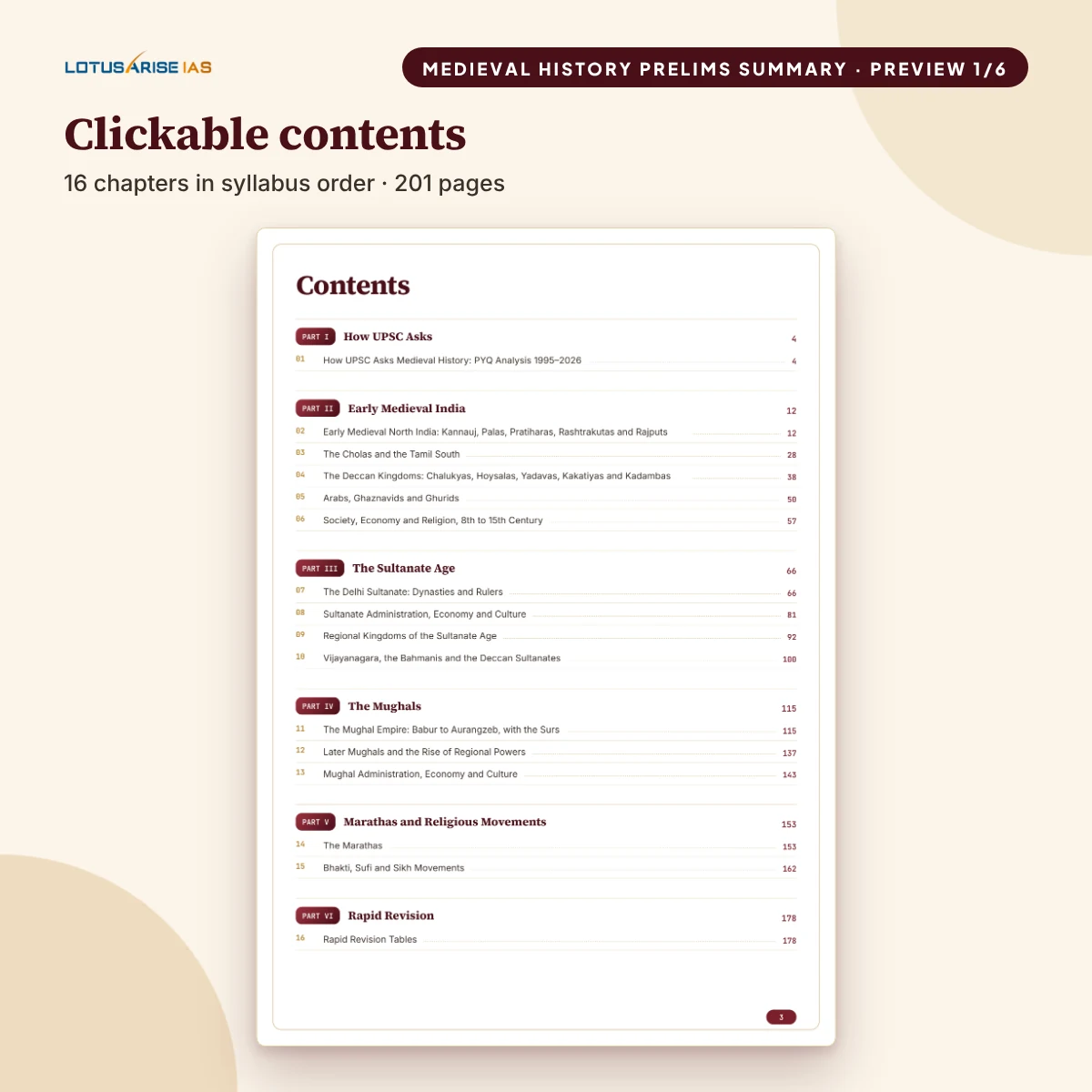
What’s inside — 201 pages
📊 Chapter 1: PYQ Analysis, 1995–2026
- Chapter-wise weightage of all 158 questions, split into 1995–2010, 2011–2020 and 2021–2026, with charts
- Questions per year, and how the formats changed after 2011
- The themes UPSC keeps returning to, with counts and what exactly is asked
- The facts asked twice or more, and the commonest traps in medieval questions
📚 14 fact chapters in syllabus order
- Early medieval India — the Tripartite Struggle, Palas, Pratiharas, Rashtrakutas and Rajputs; the Cholas and the Tamil south; the Chalukyas, Hoysalas, Yadavas, Kakatiyas and Kadambas
- The Sultanate age — Arabs, Ghaznavids and Ghurids; society, economy and religion from the 8th to the 15th century; the Delhi Sultanate’s dynasties and its administration, economy and culture; the regional kingdoms; Vijayanagara, the Bahmanis and the Deccan Sultanates
- The Mughals — Babur to Aurangzeb with the Surs; the later Mughals and the regional powers; Mughal administration, economy, art and painting
- The Marathas and the Bhakti, Sufi and Sikh movements
What makes this different from downloaded summary PDFs: each chapter opens with a PYQ Radar that tells you what UPSC asked from it and in which years, so you know where to spend your time before you read a line. The facts are written the way a correct statement reads in a Prelims question, and anything that comes in a set (rulers, battles, offices, texts and authors, travellers, temples and builders) is a table. Every fact was checked against standard texts and reliable sources.
🎯 158 Prelims PYQs, each where it belongs
Every medieval-history question from 1995 to 2026, in UPSC’s wording, placed at the end of the chapter that answers it, with the right option marked and a one-line reason. Answers for 2011–2025 follow UPSC’s official keys and 2026 follows the provisional key. For 1995–2010, the answers are the agreed answers from solved papers, each checked against the facts.
🧩 73 Prelims Fact and Trap boxes
The Trap boxes take on the confusions UPSC builds options from: two Bhojas, Rajaraja or Rajendra, Mughal or Sultanate offices, Sufi names that look alike, which Guru did what.
🗂️ Rapid Revision Tables — 24 pages
37 tables for the last week: rulers by dynasty, battles, monuments and builders with UNESCO listings, foreign travellers, texts and authors, Bhakti and Sufi saints, administrative and revenue terms, and an A–Z glossary.
The aspirant who buys this
Prelims 2027 aspirants in revision mode — you have read Medieval History once and need a 201-page version that puts what UPSC asks first.
Repeaters — you keep losing marks on close options in medieval questions. The PYQ Radar and the Trap boxes are built for exactly that.
First-time aspirants — you want to see, before you start a long book, which parts of the period the paper actually tests.
State PSC aspirants — medieval India is in every State PSC paper, and the tables serve both.
Why not just solve the PYQs from a free list?
Free PYQ lists exist, and they are useful. But a list of questions only tells you what was asked once. It does not give you the other members of each set, the facts behind the wrong options, or the context that makes the right answer stick, and it is ordered by year, not by topic.
This book answers each question inside the chapter that teaches it, and then gives you the whole set UPSC could ask next. If you want the full story of the period instead, the companion Medieval Indian History UPSC Notes (595 pages, ₹236) is the complete book. This summary is the version you revise from.
Price and delivery
₹149 for 201 pages — about 74 paise a page, and less than most aspirants spend on a single printed guide.
Want to see it first? Download the free sample PDF — the cover, the full contents and three complete chapters: Chapter 1 (PYQ Analysis), Chapter 11 (The Mughal Empire) and Chapter 15 (Bhakti, Sufi and Sikh Movements).
One-time payment. No subscription. No recurring charge.
Instant PDF download after payment. The download link is also sent to your email — please check the spam folder if it does not arrive in a few minutes. Download it again any time from My Account.
For support: support@lotusarise.com
Related products
-

-
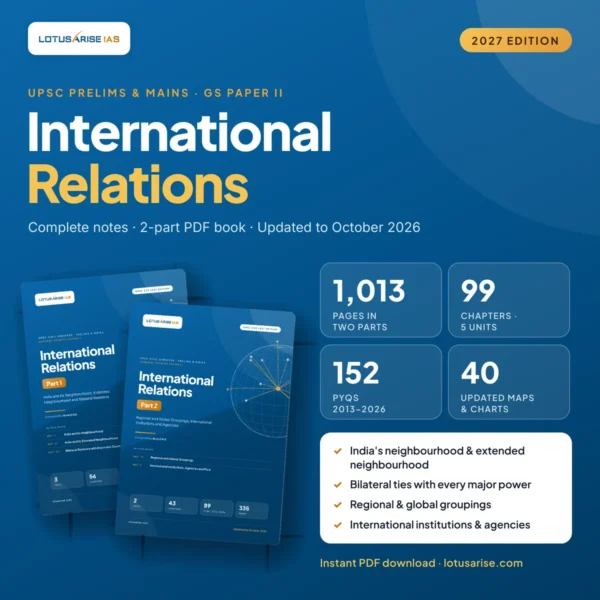
International Relations Notes for UPSC: Prelims & Mains GS Paper II (2027 Edition) by LotusArise IAS
Original price was: ₹500.00.₹236.00Current price is: ₹236.00. -
-
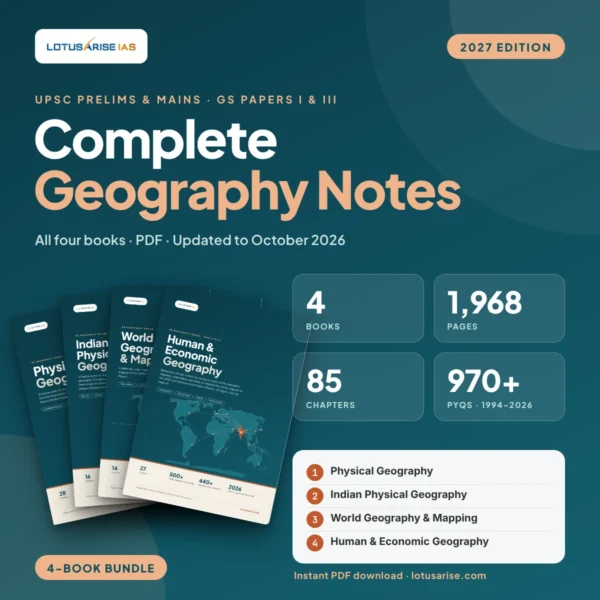
Complete Geography Notes for UPSC GS Prelims + Mains: 4-Book Bundle (2027 Edition) by LotusArise IAS
Original price was: ₹1,500.00.₹599.00Current price is: ₹599.00.