

Ancient Indian History Prelims Summary Notes for UPSC: Facts and PYQs 1995–2026 (2027 Edition) by LotusArise IAS
₹149.00
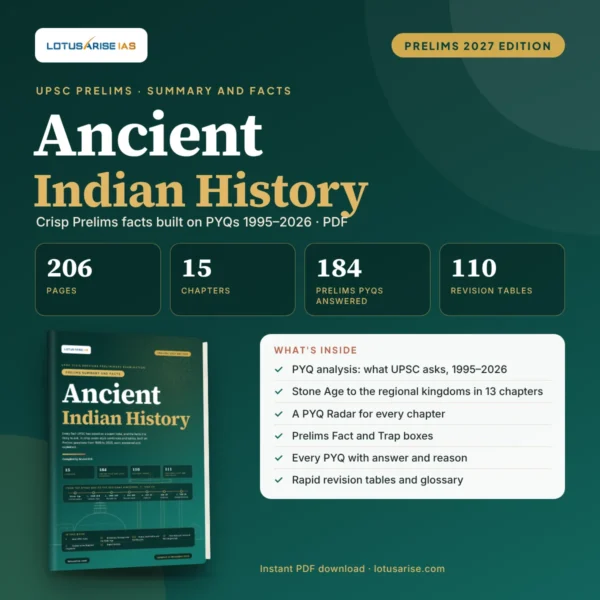
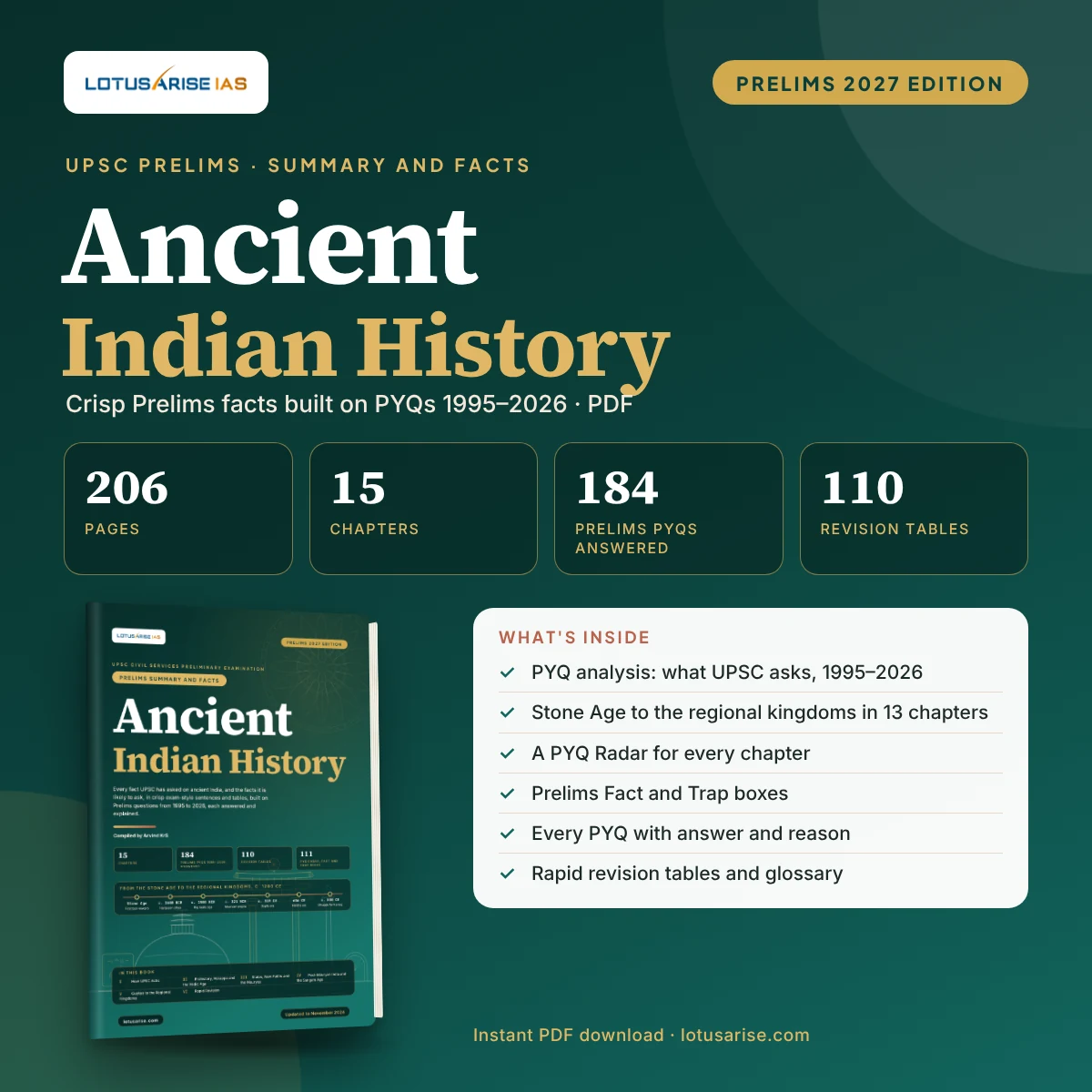
₹149 for the Prelims 2027 Edition — 206 pages and all 184 Prelims PYQs (1995–2026), answered.
Most aspirants revise Ancient History for Prelims the wrong way. Rereading a 600-page book in the last month. Making notes they never finish. Then losing two easy marks on Kalsi’s state, Faxian’s king or the material of the Dancing Girl.
Ancient Indian History Prelims Summary Notes fix this.
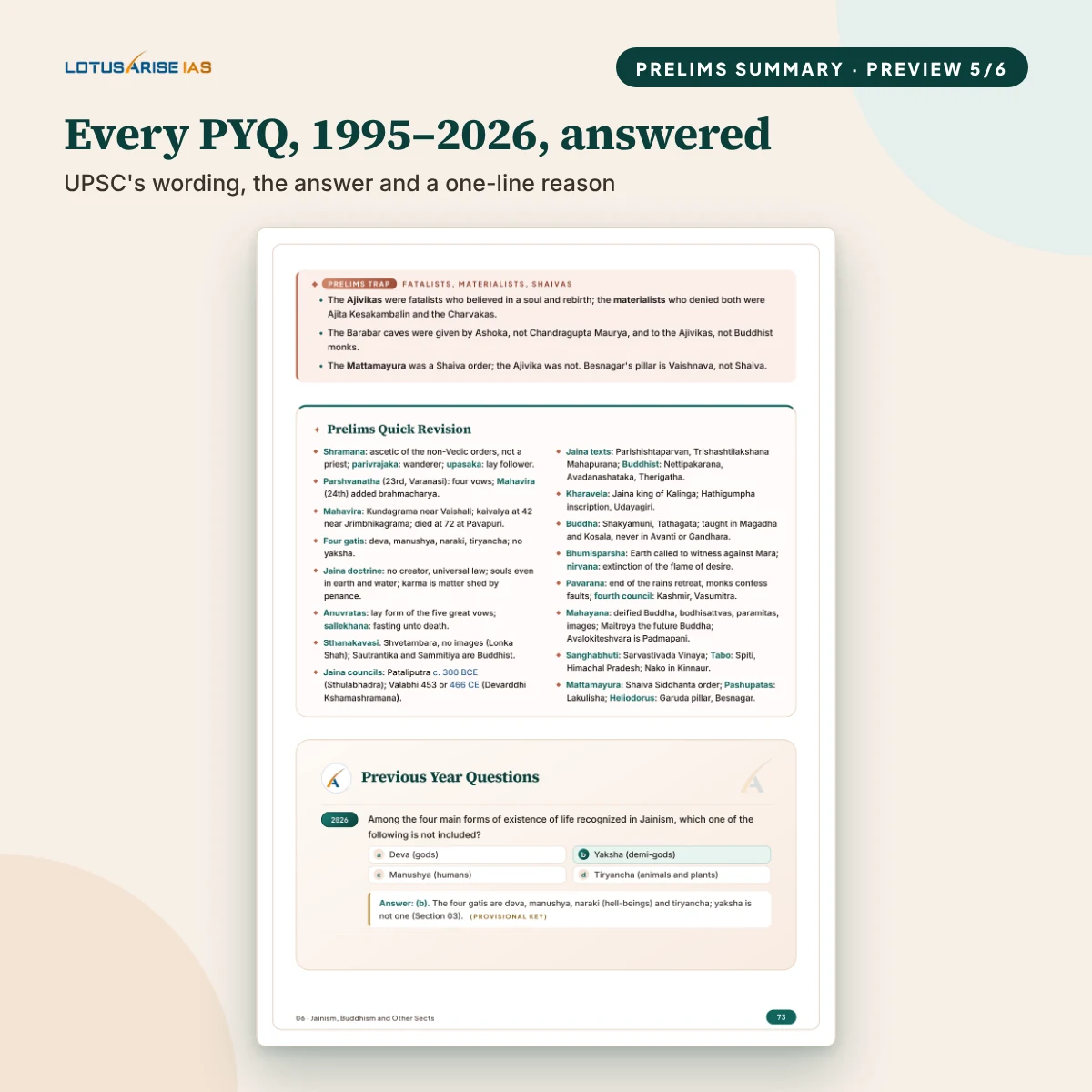
📜 All 184 Prelims PYQs (1995–2026), answered — UPSC’s wording, the right answer and a one-line reason, chapter by chapter
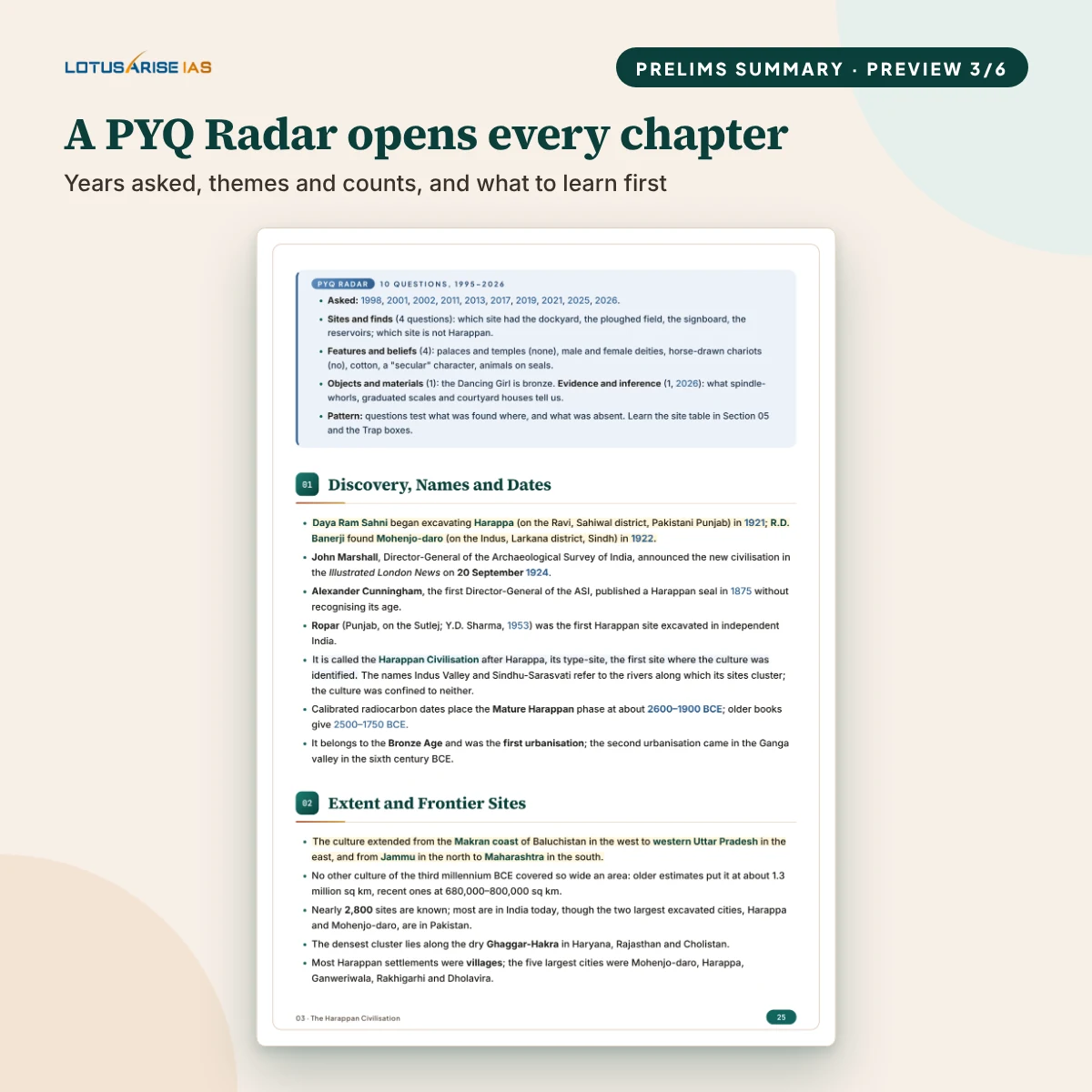
🎯 A PYQ Radar for every chapter — the years asked, the themes and what to learn first
✍️ Crisp exam-style fact sentences — Stone Age to the regional kingdoms, in 13 chapters and 206 pages
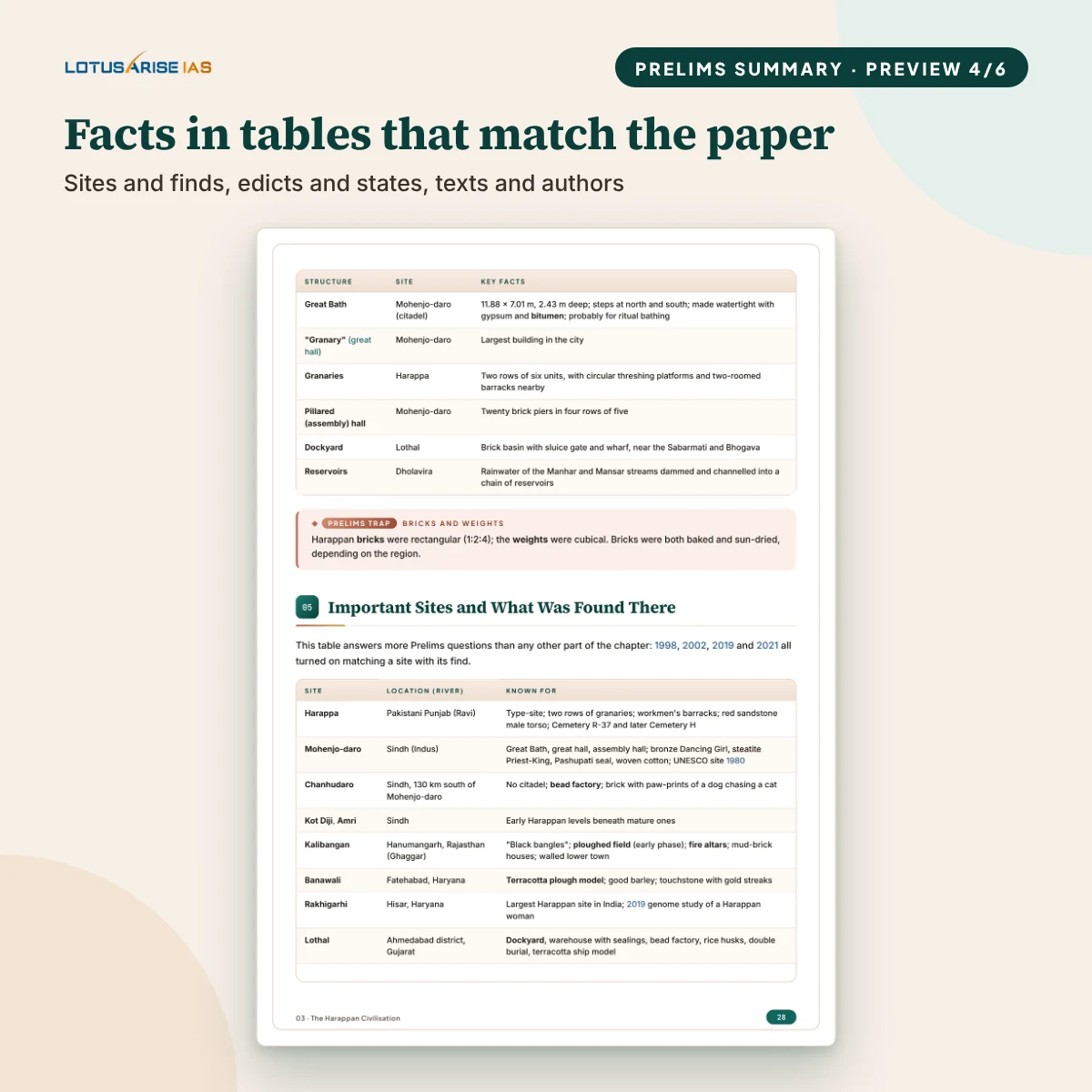
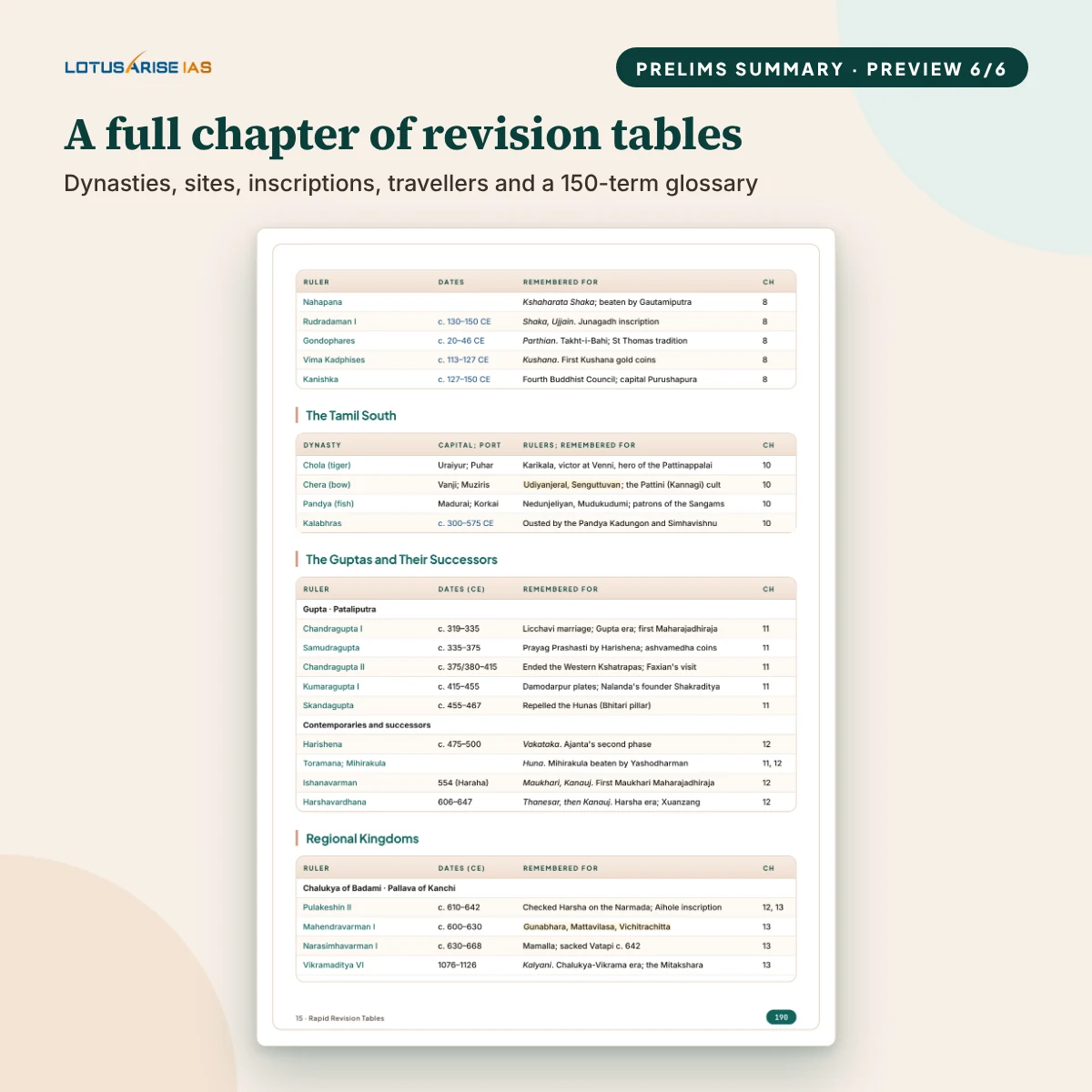
📊 110 revision tables — sites and states, edicts, rulers, texts and authors, travellers, and a 150-term glossary
📱 Instant PDF download — study on mobile, laptop or tablet, offline, or print it
One-time payment. No subscription. Unlimited downloads — the link does not expire.
⭐ Read by 300,000+ UPSC aspirants every month on LotusArise IAS
Features:
- Comprehensive Coverage
- Complete Syllabus
- Suitable for: UPSC & State PSCs exams
- Format: Digital PDF (Downloadable)
- 337,362+ aspirants visit every month
The problem most aspirants don’t talk about
Ask any Prelims aspirant two months before the exam how Ancient History is going. They won’t say the subject is hard. They will say one of three things:
“I have read the full book once, but I can’t revise 600 pages again before Prelims.”
“I knew the topic, and I still got the question wrong because of one word: only, all, first.”
“I keep mixing up who gave the Barabar caves, which edict names the Cholas and which site is in which state.”
These are not personal failings. The facts are already in your head from your first reading. What is missing is a short, reliable version arranged the way UPSC asks. This book is that version.
Why this is a smart way to spend your revision hours
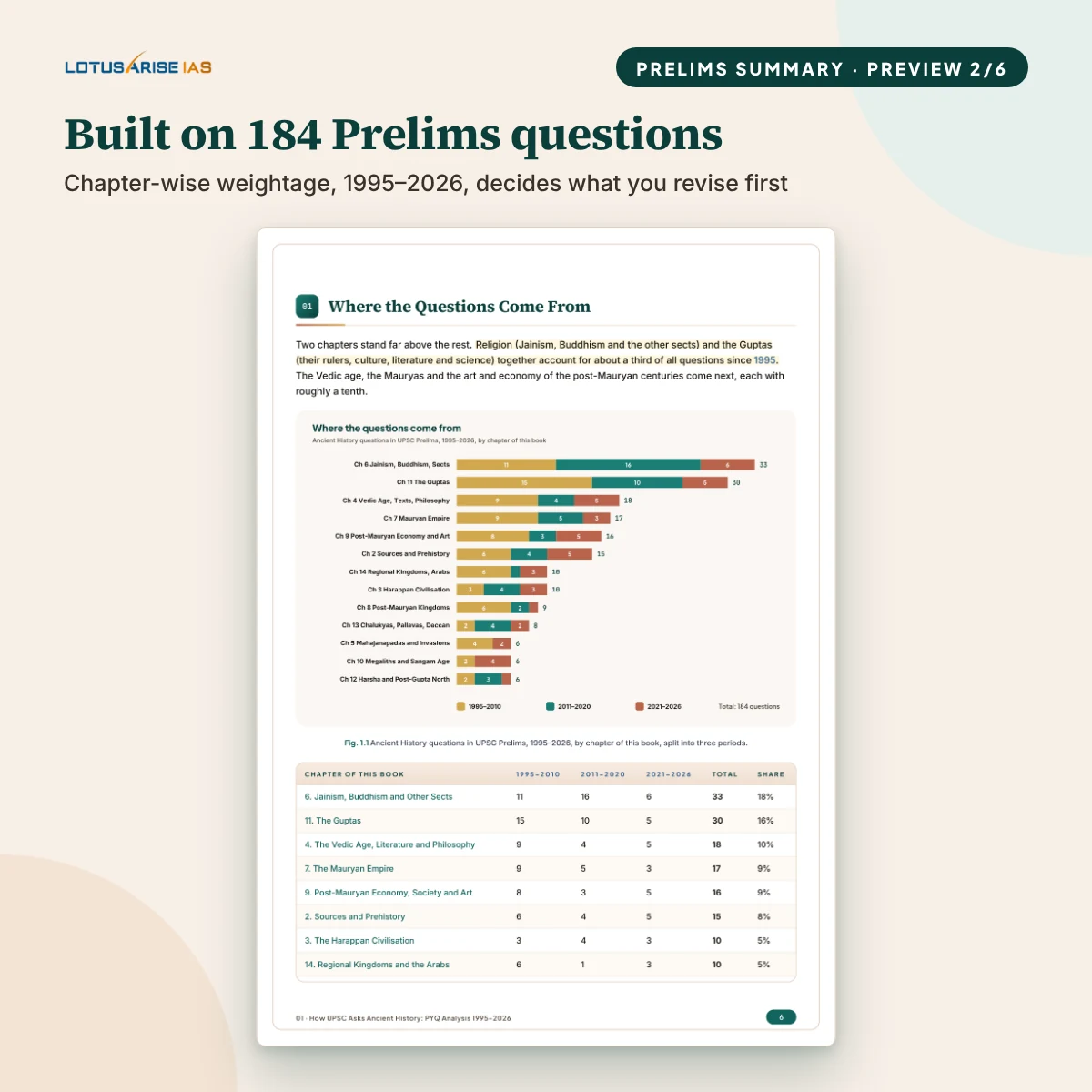
UPSC has set 184 questions on India before about 1200 CE in the Prelims papers from 1995 to 2026, and 13 in the 2026 paper alone, the most in any year since 1995. The questions cluster: religion (Jainism, Buddhism and the other sects) and the Guptas together carry about a third of them, and some questions have come back in almost the same words (Nagara, Dravida and Vesara in 1995 and 2012; what Buddhism and Jainism shared in 1996 and 2012; the kingdoms of the Buddha’s life in 2014 and 2015).
The challenge is not the subject. It is knowing which facts UPSC tests, and having them in one place you can revise in a few days.
What’s inside — 206 pages
📈 Chapter 1: PYQ Analysis, 1995–2026
- Chapter-wise weightage of all 184 questions, split into 1995–2010, 2011–2020 and 2021–2026
- How the question formats changed: one-liners and assertion–reason, statements, “how many pairs”, and the 2026 evidence-and-inference questions
- The themes UPSC keeps returning to, with the years
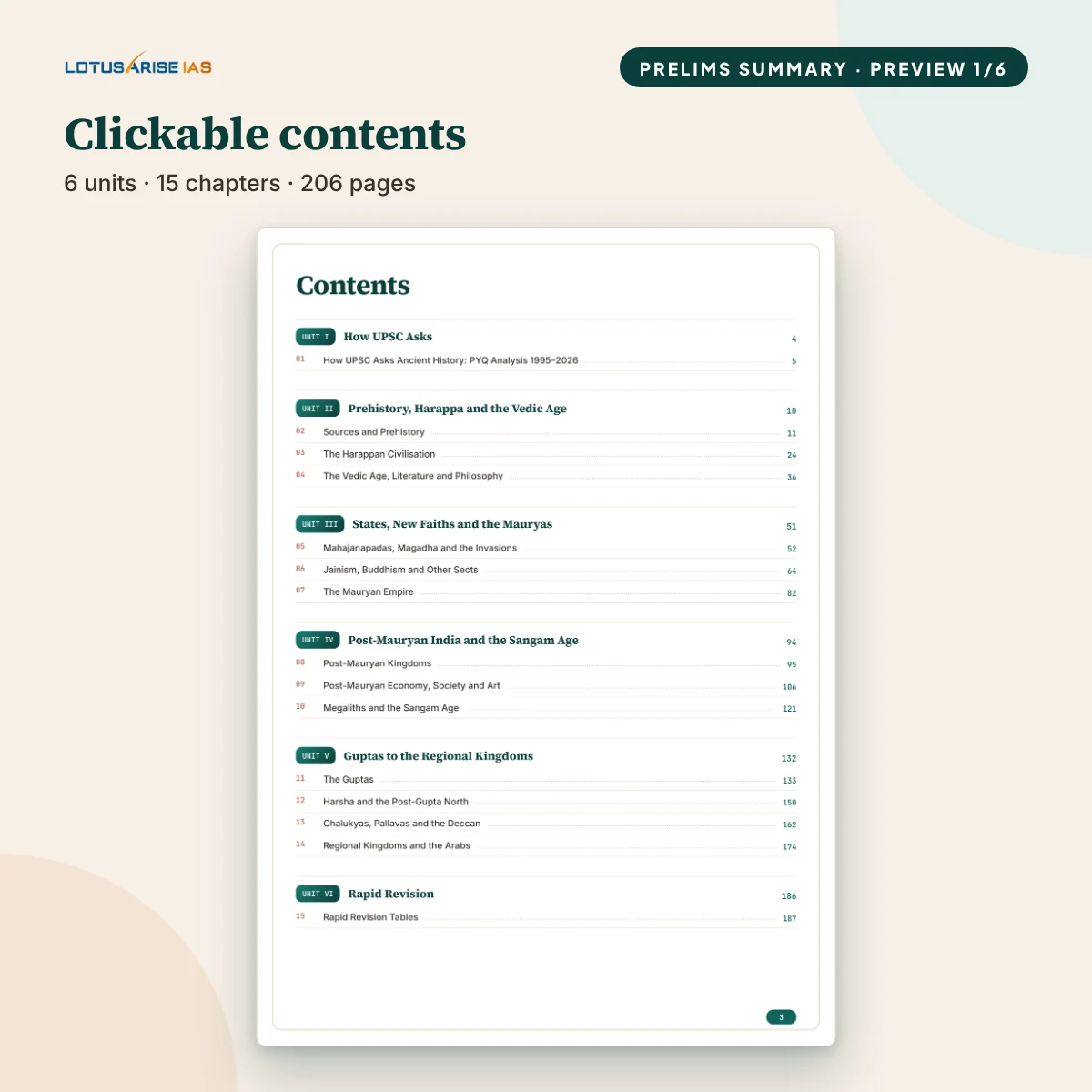
📚 13 Fact Chapters — Stone Age to the Regional Kingdoms
- Sources, chronology and eras; the Stone Age, Neolithic and Chalcolithic cultures
- The Harappan civilisation: sites and what was found at each, town planning, seals, script, decline
- The Vedic age, Vedic literature and the six schools of philosophy
- The Mahajanapadas, the rise of Magadha, the Persian and Macedonian invasions
- Jainism, Buddhism, Ajivikas and the early Bhagavata and Shaiva sects
- The Mauryas: Ashoka’s edicts and their sites, dhamma, officials, art
- Shungas, Satavahanas, Indo-Greeks, Shakas and Kushanas; post-Mauryan trade, guilds, coins, stupas and schools of art
- Megaliths and the Sangam age; the Guptas, their culture, literature and science; Harsha
- Chalukyas, Pallavas and temple styles; Rashtrakutas, Palas and the coming of the Arabs
What makes this different from free PDFs: every chapter opens with a PYQ Radar that tells you what UPSC has asked from it and what to learn first. The facts are short, exam-style sentences ordered so the most-tested ones come first. Anything that comes in sets (sites and states, kings and dynasties, texts and authors) is in a table, because “how many pairs” questions punish half-knowledge. Prelims Fact and Prelims Trap boxes mark the confusions UPSC has actually used.
📝 All 184 Prelims PYQs (1995–2026), Answered
- Every question at the end of the chapter that answers it, in UPSC’s wording
- The answer and a one-line reason that points to the section of the chapter where the fact sits
- 2026 answers marked as the provisional key until UPSC publishes the final key
📊 Chapter 15: Rapid Revision Tables
- Dynasty and ruler timelines, sites and their states, inscriptions, texts and authors, foreign travellers, councils and eras
- A glossary of 150 terms most useful for Prelims
- Built for the last week before the exam
The aspirant who buys this
First-timers — have read the full Ancient History book once and need a short version for the second and third revisions.
Repeaters who lost marks to elimination traps — knew the topic, misread one word. The Trap boxes and the PYQ reasons train exactly this.
Aspirants with History, Sociology or Geography optional — need Ancient History only for Prelims and do not want to spend Mains time on it.
Self-study aspirants outside Delhi, Prayagraj and Jaipur — want a revision book built on what UPSC has asked, without a coaching module.
Working professionals — have a few hours a week. One chapter is a sitting.
State PSC aspirants — the ancient history core is the same.
Why not just use free notes from Telegram?
Free notes exist and many are useful. Most aspirants already have several Ancient History PDFs on their phones. The difference is not the facts. It is the system: free notes are not arranged by what UPSC has asked, do not carry 32 years of PYQs with answers next to the facts that answer them, and do not show you the traps the paper has set before.
If you have the time to build your own PYQ-linked revision notes from scattered sources, you may not need this. If you want them already built, open the PDF and start revising.
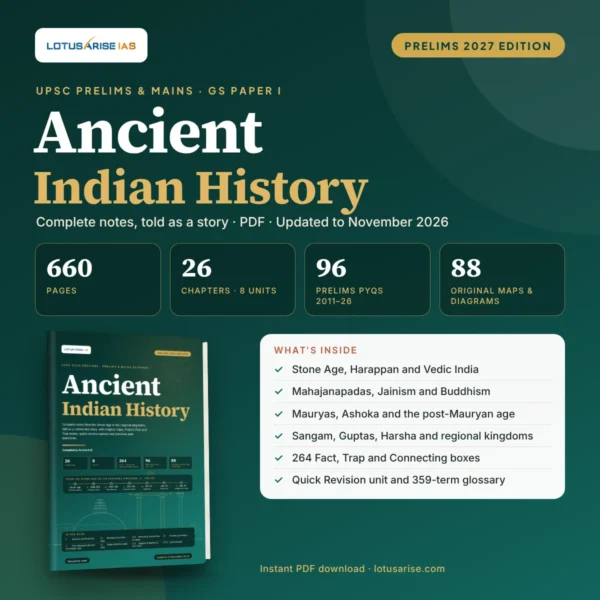
Want the full story behind these facts for Mains? The complete Ancient Indian History UPSC Notes covers the same period in 26 chapters with maps and Mains questions.
Price and delivery
₹149 for 206 pages and 184 answered PYQs.
Want to see it first? Download the free sample PDF. It has the cover, the full contents and three complete chapters: Chapter 1 (PYQ Analysis), Chapter 3 (Harappan Civilisation) and Chapter 7 (Mauryan Empire).
One-time payment. No subscription. No recurring charge.
Instant PDF download after payment. The download link is also sent to your email; please check the spam folder if it does not arrive in a few minutes. You can download it again any time from My Account.
For support: support@lotusarise.com
Related products
-

Ancient Indian History UPSC Notes
Original price was: ₹499.00.₹236.00Current price is: ₹236.00. -
-
Agriculture Notes for UPSC: Prelims & Mains GS Papers I and III (2027 Edition) by LotusArise IAS
Original price was: ₹250.00.₹149.00Current price is: ₹149.00. -